

All Topics

September 12, 2026 • 5 Minute Read
Leadership Briefing | September 12, 2026
What We Heard at the Summit, and the Year Ahead By Pastor Anton Brown
September 12, 2026 Fellow servants, Thank you for Friday evening and Saturday, August 7th and 8th, at the Briggs. You came prepared, spoke plainly, and prayed. Your table sheets have been gathered into a report. Here is what they say, and where it goes from here. The most important thing: the room converged around the Elders three priorities for 2027: deepen prayer, strengthen participation in the covenant life of the church, and make Sunday worship more intentionally intergenerational. The room also named real constraints: schedules, volunteers, family needs, facilities, and uneven participation. That honesty is a gift. The three priorities, as the tables saw them An evening prayer service. Simple and traditional, aimed at January 2027. Two tables put this first. The open questions are practical: which evening, how we avoid colliding with our Bible Fellowship Groups, and how we protect family time. Children in the worship service. DiscipleTown rests for a season, children remain in the service with their parents, and the nursery continues, with sermon-coordinated handouts to help children take part. More than one table noted it is already happening. The open question is what support we offer children who cannot yet sit through a full service. Covenant duties and self-examination. Periodic reminders of our covenant, a short time of prayer and self-examination before congregational meetings, a leadership meeting beforehand, and clear EQUIP goals. The hardest question was the right one: what pathway moves people from the fringes into full participation? The split was two tables for prayer, one for children in worship, one for covenant duties, and every table affirmed all three. Let me be plain: the worksheets record preferences, proposed changes, and questions, not final votes, named owners, or deadlines. Those will be confirmed, not inferred. On resources, most sheets said attention only; a few asked for a modest budget line. What the Lord has done, and what we have lost The gratitude lists were long: new people and families, new leaders and deacons, baptisms, a strong women's Bible Fellowship Group, stabilized worship, better financial reporting, and a financial cushion. God is still with this church, and we said so. We also named losses honestly. They cluster around people, participation, leadership capacity, and consistency: members and families who drifted away, newcomers who did not return, some giving, DiscipleTown, and a Bible Fellowship Group that stopped meeting. We do not pretend these away. We bring them to the Lord. You can get more insight from the Summit through the Leadership Summit Capture Report. The Proposed 2027 Ministry Calendar The first document is the Proposed 2027 Ministry Calendar🔗. It consolidates the Summit calendar-wall sticky notes into a month-by-month draft, January through December 2027. Each line is marked Clear (readable on the photographs) or Confirm (partly legible, no firm date, or open to more than one reading). It ends with a confirmation worksheet: event, date and time, owner, room, budget, and publicity due. One rule, asked graciously: nothing on it is a commitment until the Servants Council reviews it on Tuesday, September 29; it is on that agenda. Please do not announce 2027 dates yet. A date repeated in good faith becomes a promise nobody voted on. The ask of every leader, the confirmation pass our process calls for: open the draft, check your items (event name, date, owner, room, budget, and communication deadline), resolve every line marked "Confirm," and send corrections to the church office by September 22nd. The Mayflower Church Q4 2026 Operations Calendar The second document is the Mayflower Church Q4 2026 Operations Calendar, the operations and events calendar for the quarter we are entering. It runs on the normal fall pattern, with Bible Fellowship Groups, EQUIP in Romans on Sundays at 8:45 AM, Men of the Word, and the Ladies' Community Bible Study meeting, and it is what Team Leaders, Group Leaders, and Board Members plan against. Dates at a glance: Tuesday, September 29: Servants Council on Zoom, 7:00 PM The Lord's Supper: Sundays, October 4, November 1, and December 6 Senior Luncheon: Thursdays, October 8, November 12, and December 10, 11:30 AM, Grille 58, Halifax Brothers, Bibles & Bacon: Saturdays, October 17, November 21, and December 19 Sunday, October 25: Quarterly Congregational Meeting and Potluck after worship, also Reformation Sunday; elections and the FY27 budget per the bylaws Sunday, November 1: Daylight Saving Time ends Saturday, November 14: Operation Christmas Child Shoebox Packing Party Tuesday, November 24: Thanksgiving Service, 6:00 PM Sunday, November 29: First Sunday of Advent; the Advent series is From Garden to Manger, November 29 to December 20 Sunday, December 13: Women's Cookie Exchange and Yankee Swap, 2:00 PM Saturday, December 19: Luminaries, 5:30 to 8:30 PM Sunday, December 20: Intro to Mayflower, 8:45 AM, Lower Level Room 5 Thursday, December 24: Christmas Eve Service, 5:00 PM A closing word The Lord has not left this church, and the lists you wrote in August say so. Do the next faithful thing, confirm your dates, and pray for the prayer service before it exists. "Therefore, my beloved brothers, be steadfast, immovable, always abounding in the work of the Lord, knowing that in the Lord your labor is not in vain" (1 Corinthians 15:58, ESV). Grace and peace,
Pastor Anton


July 11, 2026 • 7 Minute Read
Leadership Briefing | July 11, 2026
PASTOR'S NOTE Dear fellow servants, Our Servants Council gathered this past Saturday, and we opened and closed our work in prayer. That is not a formality. We wanted to seek the Lord before we planned, and to give the morning back to Him when we were done. I want you to know that our summer is showing a healthier, more organized rhythm across the church. Our ministries and leaders are taking clearer shape, the operations plan is settling many things that used to pull at us, and the church office has more room to breathe than it has had in a long while. None of that is a reason to boast. It is a reason to give thanks, and to keep our hands to the work God has put in front of us. There is a good deal to share in this issue, most of it pointing toward our July 26 Quarterly Congregational Meeting. Please read it through, and please pray for that gathering. Warmly in Christ, Pastor Anton MINISTRY UPDATES Quarterly Congregational Meeting, Sunday, July 26, with a luncheon. This is the largest thing on our near horizon, and I want our leaders to help set the tone for it. We are framing this quarter's meeting around worship and prayer, and we will conduct our business in an orderly, Christ-honoring way. The Call to the Meeting and the accompanying materials go out tomorrow, our two-week notice. Please look for them and read them before you come. Governing documents coming to a vote. As part of this meeting, the congregation will consider a set of revision proposals to our constitution and bylaws. At a high level, the aim is to tidy and clarify our governing documents so that the bylaws state our "ends," the goals we are committed to, while our policies carry the "means," the specific ways we pursue them. There are also some housekeeping and conforming corrections. The congregation will also be invited to consider adopting a fuller statement of faith, the Baptist Faith and Message 2000. The full revision proposals will be printed and available with the July 12 materials, so please read them for yourself rather than relying on the summary. Two new deacons and a new member. With thanks to God, the congregation will vote on July 26 to bring on two new deacons, Brad Little and Chris Little. We also warmly welcome Neil Shea, who is coming on as a member. Please keep them and their service in your prayers. Ministry Team Charters are now live. The Servants Council approved our new Ministry Team Charters, and they now live in the Mayflower Wiki under the operations plan (operations plan → organization chart → team charters). Each charter says why a team exists, what its leader is responsible for, where its work begins and ends, and who provides oversight. If you lead a team, please point your people to the charter that covers them. Please ensure new members receive a paper copy along with the link when they join your team. We will walk through the charters together at the Leadership Summit. Family ministry resources are rolling out. We now have children's worship packs, age-appropriate sermon activity sheets, nursery stories tied to the Sunday text, and weekly family devotionals that began on Father's Day, along with a new family-ministry station taking shape in the foyer. These are meant to help our families worship together, and they are an especially warm welcome for visiting families and for families who keep their children with them in the service. One practical request: please help us remind families to return the worship packs after worship so they are ready for the next Sunday. Strengthened child-safety framework. The Council adopted an updated Child Safety Policy along with a new policy governing how we protect the children in our care. A required, hands-on training component for our childcare workers is coming, and clear communication for parents will follow. We take this seriously as an act of love and stewardship toward the families who trust us with their children. Sanctuary guidepost banners in the works. We are designing a set of "guidepost" banners for the sanctuary, drawing on Jeremiah 31:21, "Set up road marks for yourself, make yourself guideposts," to keep our shared values before us as we worship. One way visitors will understand what Mayflower is about is through these banners that display our core values, vision, and mission. DATES AT A GLANCE Sunday, July 26 — Quarterly Congregational Meeting and luncheon Friday and Saturday, August 7 and 8 — Leadership Summit (registration is on this page) Sunday, August 30 — Back to Church / I Love My Church / Southern Rail Sunday, October 25 — next Quarterly Congregational Meeting (Reformation Sunday) For the current operations calendar, see the link below. ON THE SHELF In this issue, I want to put a small, practical book in your hands: What to Do on Thursday: A Layman's Guide to the Practical Use of the Scriptures by Jay E. Adams. The whole burden of the book is the gap between the Bible we hear on Sunday and the decisions we actually face the rest of the week, and Adams patiently teaches ordinary Christians how to move from knowing Scripture to genuinely using it to guide real, everyday choices. That is exactly the work our leaders and servants are doing all the time, making practical decisions on the church's behalf, and I have found this little book a steady help in learning to bring the Word to bear on Thursday and not only on Sunday. I commend it warmly to you as a fellow servant. BEFORE THE NEXT BRIEF A few things to carry into the next two weeks: Watch for the congregational meeting materials in the foyer. The Call to the Meeting and the revision proposals go out tomorrow. Please read them before July 26. Register for the Leadership Summit (August 7 and 8) using the registration block on this page, if you have not already. Point your team to its charter in the Mayflower Wiki, and let me know if you have questions about scope or oversight. Help families return the worship packs after Sunday worship so they are ready for the next week. Mark Your Calendar: The Leadership Summit, August 7 and 8 I have one invitation to close with, and I want you to put it on your calendar ASAP. On Friday and Saturday, August 7 and 8, 2026, we are gathering for a Leadership Summit. This is where we will walk through the operations plan together, sharpen our shared vision, set goals, look at team budgets, and equip one another for the year ahead. I want us to plan shoulder to shoulder and leave more unified than we came. Here is the schedule, so mark both blocks now. We will meet Friday evening, August 7, from 6:30 to 8:30 p.m., and again Saturday, August 8, from 8:30 a.m. to 2:00 p.m. Lunch will be provided on Saturday, so come hungry and plan to stay. We will meet at the Briggs. For now, the most important thing you can do is hold both sessions and plan to be there.Register for Friday HereRegister for Saturday Here Thank you for the way you serve. It is a joy and an honor to labor alongside you, and I believe the Lord has good work for us in the year ahead. Let us do it decently and in order, for His glory and the good of His people.

June 27, 2026 • 8 Minute Read
Leadership Briefing | June 27, 2026
Welcome to Leadership Central and our first Leadership Briefing: Where We Serve Well Together Friends, if you lead anything at Mayflower, this place is for you. Pull up a chair. I want to show you what we have built, and why I believe it is going to make your service lighter, clearer, and more joyful in the year ahead. Welcome For years our leaders have carried a lot in their heads. How we run an event. Who you ask for access to a tool. What we say yes to and what we say no to. Most of that lived in the memory of whoever had done it last, and when that person stepped away, the knowledge often walked out the door with them. That is a hard way to serve. Leadership Central changes that. This is our hub for the people who lead at Mayflower: elders, deacons, ministry leads, and the key volunteers who keep the body moving. Here you will find the resources, the clarity, and the shared rhythms you need to serve well together. Not a manual you read once and forget, but a living place we keep returning to. My hope is simple. When the "how we work together" is written down and shared, you are freed to give your best attention to the people in front of you and to the Gospel we carry. That is the heartbeat of everything we do. We are building a discipleship community rooted in the knowledge of Christ, driven by faith, empowered to share the Gospel, and committed to welcoming and equipping others in love and truth. Leadership Central exists to serve that mission, not to replace it. What the Operations Plan Is The centerpiece of all this is our new operations plan, which the Servants Council adopted on May 30, 2026. We call it the Streamline Admin System. Think of it as Mayflower's operational playbook: sixteen numbered systems that spell out how we work together as a church. Twelve of them are drawn from Michael Lukaszewski's book "Streamline: How To Create Healthy Church Systems," and we have extended his framework with four further systems written for our own setting. It all lives on our church wiki, ready for you to use. Now, I know what a phrase like "admin system" can stir up. It can sound like bureaucracy, like more forms and more meetings. Let me be plain. This is not bureaucracy. This is a gift. When the way we work together is written down and shared, no leader has to reinvent the wheel, no volunteer is left guessing, and no ministry collapses the moment one person steps back. The plan carries the weight of "how" so that you can carry the weight of "who." It frees you to focus on people and on the Gospel, which is exactly where your heart wants to be. The Biblical Case for Shared Plans I want to take a moment here, because I do not want anyone to mistake this for worldly pragmatism. Some Christians get nervous when a church talks about systems and plans, as if order were the enemy of the Spirit. It is not. The Scriptures show us, again and again, that God's people work from agreed-upon, prearranged ways of serving together. Order is not the enemy of love. Order is how love makes sure no one gets overlooked. Look at the early church. In Acts 6, the congregation was growing fast, and a problem surfaced: "their widows were being neglected in the daily distribution" (Acts 6:1, ESV). The apostles did not improvise. They created a defined role, set a clear standard for it, and appointed seven trusted men to that task, so that they themselves could hold to their own calling. "It is not right that we should give up preaching the word of God to serve tables," they said, and so they devoted themselves "to prayer and to the ministry of the word" (Acts 6:2, 4, ESV). A shared plan kept the widows fed and kept the word preached. When a hard question divided the churches in Acts 15, the leaders did not settle it by whoever spoke loudest. They gathered, they deliberated, and they reached a decision they could put in writing and circulate to the churches. "It has seemed good to the Holy Spirit and to us" (Acts 15:28, ESV), they wrote. And when Paul instructed the Corinthians about their gatherings, he summed up the whole concern in one line: "But all things should be done decently and in order" (1 Corinthians 14:40, ESV). And here is what settles it for me. Our Lord Jesus worked this way too. He was never frantic, never scrambling. He appointed twelve and "began to send them out two by two" with specific instructions (Mark 6:7, ESV). He sent seventy-two others on ahead of Him, "two by two, into every town and place where he himself was about to go" (Luke 10:1, ESV). He made advance arrangements for the upper room and for the colt at the triumphal entry, sending disciples ahead with exact directions. The Son of God moved through His ministry deliberately, entrusting defined responsibilities to His people. If our Savior worked from prearranged plans, we can stop apologizing for doing the same. Plans and shared systems are not a retreat from faith. They are how a body orders itself so the work goes forward in peace and no one is overlooked. How It Helps You This Week This is where it gets practical. Let me put you inside some real situations our leaders face, and show you exactly where the operations plan helps. If you are new to all of this, start at the overview page for the Streamline Admin System and get the lay of the land. A new ministry idea just landed on your plate. How do you decide whether to say yes? Not every good idea is the right idea for us to carry right now. We have ministries we guard with our best energy, and saying yes to everything is how a leader burns out and a church loses focus. Before you commit, look at our Priority Ministries, which names what we protect and what we lovingly say no to. If you want a step-by-step way to weigh the call, our Decision-Making Framework will walk you through it. You just finished an event and want to know whether it was worth doing again. Good instinct. We do not want to keep running things out of habit, and we do not want to quietly drop something that bore real fruit. Our Event Evaluation gives you a simple process and a template to capture what worked, what did not, and whether to do it again. Twenty minutes with that template will save the next leader hours. A new volunteer asks who they report to and how to get the tools they need. This question should never leave anyone stuck. Send them to our Organization Chart and Access page, which lays out who oversees what and how to get set up with the tools for the work. You are stepping into a role and you are not fully sure what is expected of you. That uncertainty is heavy, and it is unfair to leave anyone carrying it alone. We have written standard position descriptions so that every role comes with clear expectations. Spend a few minutes in Role Clarity and Standardization and you will know what you are responsible for, what you are not, and what a good fit in the role looks like. You will be away for a season, or you need to hand a ministry off well. Life happens, whether it is a new baby, a season of caregiving, or simply the right time to pass the baton. None of that should leave a ministry exposed. Our Leadership Transitions page gives you the plans for short-term absence, coverage, and clean handoffs, so the work continues in peace and the next person is set up to thrive. Mark Your Calendar: The Leadership Summit, August 7 and 8 I have one invitation to close with, and I want you to put it on your calendar now. On Friday and Saturday, August 7 and 8, 2026, we are gathering for a Leadership Summit. This is where we will walk through the operations plan together, sharpen our shared vision, and equip one another for the year ahead. I do not want you to meet the Streamline Admin System alone on a screen. I want us to learn it shoulder to shoulder and leave more unified than we came. Here is the schedule, so mark both blocks now. We will meet Friday evening, August 7, from 6:30 to 8:30 p.m., and again Saturday, August 8, from 8:30 a.m. to 2:00 p.m. Lunch will be provided on Saturday, so come hungry and plan to stay. We will meet at the Briggs. For now, the most important thing you can do is hold both sessions and plan to be there. Oh, and REGISTER HERE FOR FRIDAY and HERE FOR SATURDAY! Thank you for the way you serve. It is a joy and an honor to labor alongside you, and I believe the Lord has good work for us in the year ahead. Let us do it decently and in order, for His glory and the good of His people. The Leadership Briefing will be sent every other week.
June 27, 2026 • 8 Minute Read
Leadership Briefing | June 27, 2026
Welcome to Leadership Central and our first Leadership Briefing: Where We Serve Well Together Friends, if you lead anything at Mayflower, this place is for you. Pull up a chair. I want to show you what we have built, and why I believe it is going to make your service lighter, clearer, and more joyful in the year ahead. Welcome For years our leaders have carried a lot in their heads. How we run an event. Who you ask for access to a tool. What we say yes to and what we say no to. Most of that lived in the memory of whoever had done it last, and when that person stepped away, the knowledge often walked out the door with them. That is a hard way to serve. Leadership Central changes that. This is our hub for the people who lead at Mayflower: elders, deacons, ministry leads, and the key volunteers who keep the body moving. Here you will find the resources, the clarity, and the shared rhythms you need to serve well together. Not a manual you read once and forget, but a living place we keep returning to. My hope is simple. When the "how we work together" is written down and shared, you are freed to give your best attention to the people in front of you and to the Gospel we carry. That is the heartbeat of everything we do. We are building a discipleship community rooted in the knowledge of Christ, driven by faith, empowered to share the Gospel, and committed to welcoming and equipping others in love and truth. Leadership Central exists to serve that mission, not to replace it. What the Operations Plan Is The centerpiece of all this is our new operations plan, which the Servants Council adopted on May 30, 2026. We call it the Streamline Admin System. Think of it as Mayflower's operational playbook: sixteen numbered systems that spell out how we work together as a church. Twelve of them are drawn from Michael Lukaszewski's book "Streamline: How To Create Healthy Church Systems," and we have extended his framework with four further systems written for our own setting. It all lives on our church wiki, ready for you to use. Now, I know what a phrase like "admin system" can stir up. It can sound like bureaucracy, like more forms and more meetings. Let me be plain. This is not bureaucracy. This is a gift. When the way we work together is written down and shared, no leader has to reinvent the wheel, no volunteer is left guessing, and no ministry collapses the moment one person steps back. The plan carries the weight of "how" so that you can carry the weight of "who." It frees you to focus on people and on the Gospel, which is exactly where your heart wants to be. The Biblical Case for Shared Plans I want to take a moment here, because I do not want anyone to mistake this for worldly pragmatism. Some Christians get nervous when a church talks about systems and plans, as if order were the enemy of the Spirit. It is not. The Scriptures show us, again and again, that God's people work from agreed-upon, prearranged ways of serving together. Order is not the enemy of love. Order is how love makes sure no one gets overlooked. Look at the early church. In Acts 6, the congregation was growing fast, and a problem surfaced: "their widows were being neglected in the daily distribution" (Acts 6:1, ESV). The apostles did not improvise. They created a defined role, set a clear standard for it, and appointed seven trusted men to that task, so that they themselves could hold to their own calling. "It is not right that we should give up preaching the word of God to serve tables," they said, and so they devoted themselves "to prayer and to the ministry of the word" (Acts 6:2, 4, ESV). A shared plan kept the widows fed and kept the word preached. When a hard question divided the churches in Acts 15, the leaders did not settle it by whoever spoke loudest. They gathered, they deliberated, and they reached a decision they could put in writing and circulate to the churches. "It has seemed good to the Holy Spirit and to us" (Acts 15:28, ESV), they wrote. And when Paul instructed the Corinthians about their gatherings, he summed up the whole concern in one line: "But all things should be done decently and in order" (1 Corinthians 14:40, ESV). And here is what settles it for me. Our Lord Jesus worked this way too. He was never frantic, never scrambling. He appointed twelve and "began to send them out two by two" with specific instructions (Mark 6:7, ESV). He sent seventy-two others on ahead of Him, "two by two, into every town and place where he himself was about to go" (Luke 10:1, ESV). He made advance arrangements for the upper room and for the colt at the triumphal entry, sending disciples ahead with exact directions. The Son of God moved through His ministry deliberately, entrusting defined responsibilities to His people. If our Savior worked from prearranged plans, we can stop apologizing for doing the same. Plans and shared systems are not a retreat from faith. They are how a body orders itself so the work goes forward in peace and no one is overlooked. How It Helps You This Week This is where it gets practical. Let me put you inside some real situations our leaders face, and show you exactly where the operations plan helps. If you are new to all of this, start at the overview page for the Streamline Admin System and get the lay of the land. A new ministry idea just landed on your plate. How do you decide whether to say yes? Not every good idea is the right idea for us to carry right now. We have ministries we guard with our best energy, and saying yes to everything is how a leader burns out and a church loses focus. Before you commit, look at our Priority Ministries, which names what we protect and what we lovingly say no to. If you want a step-by-step way to weigh the call, our Decision-Making Framework will walk you through it. You just finished an event and want to know whether it was worth doing again. Good instinct. We do not want to keep running things out of habit, and we do not want to quietly drop something that bore real fruit. Our Event Evaluation gives you a simple process and a template to capture what worked, what did not, and whether to do it again. Twenty minutes with that template will save the next leader hours. A new volunteer asks who they report to and how to get the tools they need. This question should never leave anyone stuck. Send them to our Organization Chart and Access page, which lays out who oversees what and how to get set up with the tools for the work. You are stepping into a role and you are not fully sure what is expected of you. That uncertainty is heavy, and it is unfair to leave anyone carrying it alone. We have written standard position descriptions so that every role comes with clear expectations. Spend a few minutes in Role Clarity and Standardization and you will know what you are responsible for, what you are not, and what a good fit in the role looks like. You will be away for a season, or you need to hand a ministry off well. Life happens, whether it is a new baby, a season of caregiving, or simply the right time to pass the baton. None of that should leave a ministry exposed. Our Leadership Transitions page gives you the plans for short-term absence, coverage, and clean handoffs, so the work continues in peace and the next person is set up to thrive. Mark Your Calendar: The Leadership Summit, August 7 and 8 I have one invitation to close with, and I want you to put it on your calendar now. On Friday and Saturday, August 7 and 8, 2026, we are gathering for a Leadership Summit. This is where we will walk through the operations plan together, sharpen our shared vision, and equip one another for the year ahead. I do not want you to meet the Streamline Admin System alone on a screen. I want us to learn it shoulder to shoulder and leave more unified than we came. Here is the schedule, so mark both blocks now. We will meet Friday evening, August 7, from 6:30 to 8:30 p.m., and again Saturday, August 8, from 8:30 a.m. to 2:00 p.m. Lunch will be provided on Saturday, so come hungry and plan to stay. We will meet at the Briggs. For now, the most important thing you can do is hold both sessions and plan to be there. Oh, and REGISTER HERE FOR FRIDAY and HERE FOR SATURDAY! Thank you for the way you serve. It is a joy and an honor to labor alongside you, and I believe the Lord has good work for us in the year ahead. Let us do it decently and in order, for His glory and the good of His people. The Leadership Briefing will be sent every other week.

September 9, 2026 • 2 Minute Read
Between Sundays starts here.
Between Sundays is the weekly letter from Mayflower Church. It arrives every Thursday, and it is short on purpose. Three things are in it every week. This Sunday. The sermon title and the passage we will open, with one sentence on where it is headed. This week. Two or three things that would change your household calendar. Not the whole calendar. One next step. A single thing worth doing before Sunday. That is the whole letter. It is not a bulletin, and it is not a second sermon. We gather on the Lord's Day. This update is for the days in between, so that nobody has to guess what is coming or wonder whether they missed something. Whether you have been at Mayflower for years or have never once walked through the doors, it is written for you. Why the letter moved. It used to go out through Mailchimp. It comes from our own site now. Three plain reasons: Mailchimp is expensive, it is not simple to use, and it kept sign-ups in a system separate from our website, so anyone who wanted to hear from the church had to go somewhere else to ask. What you get out of that is simpler than the explanation. One place. The letter is here, past letters stay here, and signing up happens here. If you already receive email from us, you are already on the list. Nothing to do, and no need to sign up again. If you are not on the list yet, sign up here:BETWEEN SUNDAYS Grateful for you, Pastor Anton
June 27, 2026 • 8 Minute Read
Leadership Briefing | June 27, 2026
Welcome to Leadership Central and our first Leadership Briefing: Where We Serve Well Together Friends, if you lead anything at Mayflower, this place is for you. Pull up a chair. I want to show you what we have built, and why I believe it is going to make your service lighter, clearer, and more joyful in the year ahead. Welcome For years our leaders have carried a lot in their heads. How we run an event. Who you ask for access to a tool. What we say yes to and what we say no to. Most of that lived in the memory of whoever had done it last, and when that person stepped away, the knowledge often walked out the door with them. That is a hard way to serve. Leadership Central changes that. This is our hub for the people who lead at Mayflower: elders, deacons, ministry leads, and the key volunteers who keep the body moving. Here you will find the resources, the clarity, and the shared rhythms you need to serve well together. Not a manual you read once and forget, but a living place we keep returning to. My hope is simple. When the "how we work together" is written down and shared, you are freed to give your best attention to the people in front of you and to the Gospel we carry. That is the heartbeat of everything we do. We are building a discipleship community rooted in the knowledge of Christ, driven by faith, empowered to share the Gospel, and committed to welcoming and equipping others in love and truth. Leadership Central exists to serve that mission, not to replace it. What the Operations Plan Is The centerpiece of all this is our new operations plan, which the Servants Council adopted on May 30, 2026. We call it the Streamline Admin System. Think of it as Mayflower's operational playbook: sixteen numbered systems that spell out how we work together as a church. Twelve of them are drawn from Michael Lukaszewski's book "Streamline: How To Create Healthy Church Systems," and we have extended his framework with four further systems written for our own setting. It all lives on our church wiki, ready for you to use. Now, I know what a phrase like "admin system" can stir up. It can sound like bureaucracy, like more forms and more meetings. Let me be plain. This is not bureaucracy. This is a gift. When the way we work together is written down and shared, no leader has to reinvent the wheel, no volunteer is left guessing, and no ministry collapses the moment one person steps back. The plan carries the weight of "how" so that you can carry the weight of "who." It frees you to focus on people and on the Gospel, which is exactly where your heart wants to be. The Biblical Case for Shared Plans I want to take a moment here, because I do not want anyone to mistake this for worldly pragmatism. Some Christians get nervous when a church talks about systems and plans, as if order were the enemy of the Spirit. It is not. The Scriptures show us, again and again, that God's people work from agreed-upon, prearranged ways of serving together. Order is not the enemy of love. Order is how love makes sure no one gets overlooked. Look at the early church. In Acts 6, the congregation was growing fast, and a problem surfaced: "their widows were being neglected in the daily distribution" (Acts 6:1, ESV). The apostles did not improvise. They created a defined role, set a clear standard for it, and appointed seven trusted men to that task, so that they themselves could hold to their own calling. "It is not right that we should give up preaching the word of God to serve tables," they said, and so they devoted themselves "to prayer and to the ministry of the word" (Acts 6:2, 4, ESV). A shared plan kept the widows fed and kept the word preached. When a hard question divided the churches in Acts 15, the leaders did not settle it by whoever spoke loudest. They gathered, they deliberated, and they reached a decision they could put in writing and circulate to the churches. "It has seemed good to the Holy Spirit and to us" (Acts 15:28, ESV), they wrote. And when Paul instructed the Corinthians about their gatherings, he summed up the whole concern in one line: "But all things should be done decently and in order" (1 Corinthians 14:40, ESV). And here is what settles it for me. Our Lord Jesus worked this way too. He was never frantic, never scrambling. He appointed twelve and "began to send them out two by two" with specific instructions (Mark 6:7, ESV). He sent seventy-two others on ahead of Him, "two by two, into every town and place where he himself was about to go" (Luke 10:1, ESV). He made advance arrangements for the upper room and for the colt at the triumphal entry, sending disciples ahead with exact directions. The Son of God moved through His ministry deliberately, entrusting defined responsibilities to His people. If our Savior worked from prearranged plans, we can stop apologizing for doing the same. Plans and shared systems are not a retreat from faith. They are how a body orders itself so the work goes forward in peace and no one is overlooked. How It Helps You This Week This is where it gets practical. Let me put you inside some real situations our leaders face, and show you exactly where the operations plan helps. If you are new to all of this, start at the overview page for the Streamline Admin System and get the lay of the land. A new ministry idea just landed on your plate. How do you decide whether to say yes? Not every good idea is the right idea for us to carry right now. We have ministries we guard with our best energy, and saying yes to everything is how a leader burns out and a church loses focus. Before you commit, look at our Priority Ministries, which names what we protect and what we lovingly say no to. If you want a step-by-step way to weigh the call, our Decision-Making Framework will walk you through it. You just finished an event and want to know whether it was worth doing again. Good instinct. We do not want to keep running things out of habit, and we do not want to quietly drop something that bore real fruit. Our Event Evaluation gives you a simple process and a template to capture what worked, what did not, and whether to do it again. Twenty minutes with that template will save the next leader hours. A new volunteer asks who they report to and how to get the tools they need. This question should never leave anyone stuck. Send them to our Organization Chart and Access page, which lays out who oversees what and how to get set up with the tools for the work. You are stepping into a role and you are not fully sure what is expected of you. That uncertainty is heavy, and it is unfair to leave anyone carrying it alone. We have written standard position descriptions so that every role comes with clear expectations. Spend a few minutes in Role Clarity and Standardization and you will know what you are responsible for, what you are not, and what a good fit in the role looks like. You will be away for a season, or you need to hand a ministry off well. Life happens, whether it is a new baby, a season of caregiving, or simply the right time to pass the baton. None of that should leave a ministry exposed. Our Leadership Transitions page gives you the plans for short-term absence, coverage, and clean handoffs, so the work continues in peace and the next person is set up to thrive. Mark Your Calendar: The Leadership Summit, August 7 and 8 I have one invitation to close with, and I want you to put it on your calendar now. On Friday and Saturday, August 7 and 8, 2026, we are gathering for a Leadership Summit. This is where we will walk through the operations plan together, sharpen our shared vision, and equip one another for the year ahead. I do not want you to meet the Streamline Admin System alone on a screen. I want us to learn it shoulder to shoulder and leave more unified than we came. Here is the schedule, so mark both blocks now. We will meet Friday evening, August 7, from 6:30 to 8:30 p.m., and again Saturday, August 8, from 8:30 a.m. to 2:00 p.m. Lunch will be provided on Saturday, so come hungry and plan to stay. We will meet at the Briggs. For now, the most important thing you can do is hold both sessions and plan to be there. Oh, and REGISTER HERE FOR FRIDAY and HERE FOR SATURDAY! Thank you for the way you serve. It is a joy and an honor to labor alongside you, and I believe the Lord has good work for us in the year ahead. Let us do it decently and in order, for His glory and the good of His people. The Leadership Briefing will be sent every other week.

October 11, 2026 • 5 Minute Read
Family Devotional: Help Us
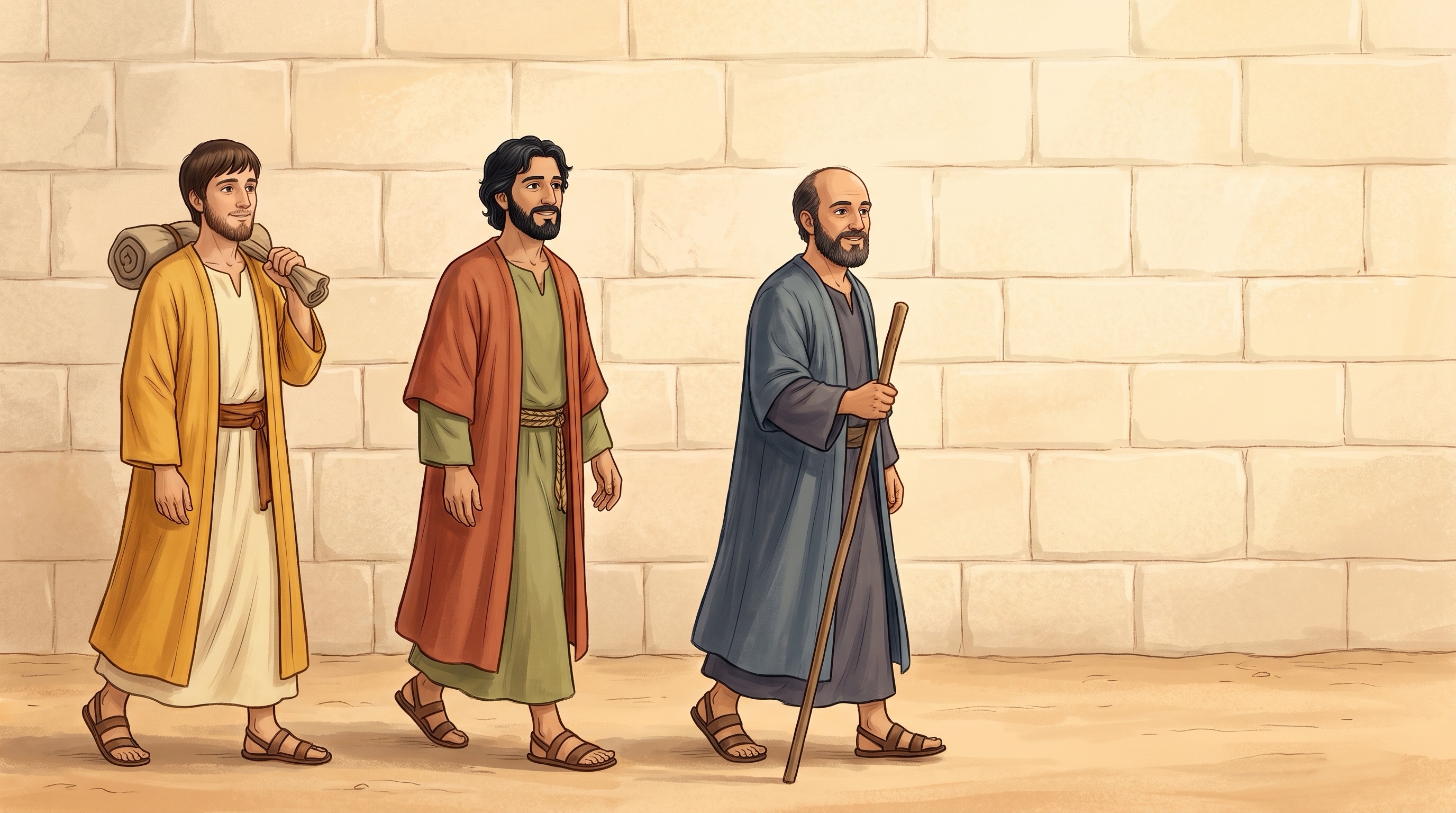
Dear Mayflower family, This week the page grows out of “Help Us,” from Acts 16:6–10. The heart of it is this: people everywhere need help, and the best help God sends is the good news about Jesus. Paul and his friends wanted to tell people about Jesus, and God closed two roads in front of them. Then one night Paul saw a man from a faraway place called Macedonia, saying, come over and help us, and the friends knew what help to bring: the good news about Jesus. The line your table will be sitting with is the one from Sunday morning: they asked for help, and God sent the gospel. Read together, talk together, pray together, sing together. Here is this week's page. Pastor Anton Help Us Family Devotional · Acts 16:6–10 · October 11, 2026 This page works two ways: as one ten-minute sitting at the table, or as five short Monday-to-Friday steps from the same page. There is no wrong way. This week's Big Idea People everywhere need help, and the best help God sends is the good news about Jesus. Memory verse “concluding that God had called us to preach the gospel to them.” Acts 16:10 (ESV) 1. READ Read Acts 16:6–10 out loud. Stay on this one passage all week. Monday: verse 6. Paul wanted to tell people about Jesus in Asia, and God said no. Tuesday: verse 7. They tried another road, and Jesus closed that one too. Wednesday: verse 8. They came to Troas, a town by the sea, and ran out of road. Thursday: verse 9. In the night a man said to Paul, come over and help us. Friday: verse 10. Paul and his friends knew the help he needed was the good news about Jesus, and they went right away. 2. THINK Paul and his friends wanted to tell people about Jesus, and Jesus closed two roads because He knew where His good news needed to go next. A man from Macedonia asked for help, and he did not even know what kind of help he needed. God sent him the very best help there is: friends who came to tell him that Jesus died for sinners and rose again, and that Jesus is able to help everyone who calls on Him. 3. TALK You do not need to ask them all. For young children: Paul wanted to go one way, and God said no. Then a man asked Paul for help. What help did God send him? For school-age children: The man said help, but he did not say what kind. When someone we know is sick, sad, or having a hard time, what are some ways we can help them? How could we tell them about Jesus too? For teens: The man from Macedonia was asking for more than he knew. Lots of people say they are spiritual, but they could not tell you that the help they need is Jesus. When things get hard, what do you reach for first? Have you ever asked Jesus to help you in your own words, the way a woman once knelt in front of Him and said, “Lord, help me” (Matthew 15:25)? For the whole table: Who is one person we know who needs help this week, and what is one way we could help them and tell them about Jesus? 4. DO Do this: Pick one person who is having a hard time: someone sick, someone lonely, someone sad. Bring them something small this week, a meal, a treat, or a card the children made, and in the card write one true sentence about Jesus, like “Jesus is able to help.” Another way to do this: Pick one person who does not know Jesus yet. Draw a little boat on a piece of paper, write that person's name on the sail, and put it on the fridge. Every night this week, ask God to send them the good news about Jesus, the way He sent Paul across the sea. 5. PRAY Father, thank You that when people cried for help, You sent the good news about Jesus, who died for sinners and rose again. Please save every person at this table who does not yet trust Jesus, and grow the ones who do. Help us to notice the people around us who need help, and give us courage to tell them about Your Son. In Jesus' name, Amen. 6. SING Come Thou Fount of Every Blessing. It sings that we have come this far only by God's help, and that Jesus came looking for us when we were wandering, which is exactly what He did for the people of Macedonia. If no one wants to sing, read the first verse out loud instead. One faith talk this week is a win.
October 4, 2026 • 4 Minute Read
Family Devotional: Timothy Joins Paul and Silas
Dear Mayflower family, This week the page grows out of "Timothy Joins Paul and Silas," from Acts 16:1–5, Sunday's passage, with Leon Jones as our guest preacher. The heart of it is this: Paul was willing to give up almost anything so people could hear about Jesus, but he never changed the good news about Jesus. A young man named Timothy, taught the Bible at home by his mother and grandmother, joins Paul and Silas, gives up something hard so Jewish people will listen, and helps carry the good news to the churches just as it was. Read together, talk together, pray together, sing together. Here is this week's page. Pastor Anton Timothy Joins Paul and Silas Family Devotional · Acts 16:1–5 · October 4, 2026 This page works two ways: as one ten-minute sitting at the table, or as five short Monday-to-Friday steps from the same page. There is no wrong way. This week's Big Idea Paul was willing to give up almost anything so people could hear about Jesus, but he never changed the good news about Jesus. Memory verse "So the churches were strengthened in the faith, and they increased in numbers daily." Acts 16:5 (ESV) 1. READ Read Acts 16:1–5 out loud. Stay on this one passage all week. Monday: verse 1. God gives Paul a new helper, a young man named Timothy. Tuesday: verse 2. The Christians in two towns said good things about Timothy. Wednesday: verse 3. Timothy gave up something hard so Jewish people would listen. Thursday: verse 4. Paul and his friends brought the churches the decisions from Jerusalem to keep. Friday: verse 5. The churches grew strong, and more people believed every day. 2. THINK Timothy's mother and grandmother taught him the Bible when he was little, and when Paul came to town, God gave Timothy to Paul as a helper. Paul had Timothy circumcised, a sign Jewish families gave their boys, not to make Timothy right with God but so Jewish people would be willing to listen, because Paul would give up almost anything so people could hear about Jesus. But Paul never changed the good news itself: Jesus did everything needed to save us, and nobody has to add anything to what He did. 3. TALK You do not need to ask them all. For young children: Timothy's mother and grandmother taught him about God when he was little. Who teaches you about God? What is one thing you have learned about Jesus? For school-age children: The Christians in two different towns said good things about Timothy. What do you think they noticed about him? What would you want people to notice about you, and who could help you grow that way? For teens: Paul would change almost anything about how he did things so people would listen, but he would never change the message. Is there something you could give up so a friend would be more willing to hear about Jesus? Have you ever been tempted to leave part of Jesus out so faith would be easier to talk about? And have you trusted Christ yourself, or have you only learned about Him? For the whole table: What is one thing our family could give up this week so that someone else could hear about Jesus or feel His love? 4. DO Do this: This week, each person picks one thing they usually get to choose, like the dinner, the game, or the seat in the car, and gives that choice to someone else in the family on purpose, without being asked. At the end of the week, talk about how Paul and Timothy gave things up so others could hear about Jesus. Another way to do this: Choose one favorite thing to share together this week, like a snack, a toy, or an afternoon, and give it to someone outside the family, a neighbor or a friend from church, with a note that says, "Jesus loves you, and we wanted to share." 5. PRAY Father, thank You that Jesus gave up everything to come and save people like us, and that nobody has to add anything to what He did. Please save every person at this table who does not yet trust Jesus, and grow the ones who do. Make us a family that gladly gives things up so others can hear about You, and that never changes Your good news. In Jesus' name, Amen. 6. SING All I Have Is Christ. Paul could give up so much because Christ was enough, and this hymn sings that nothing else is needed. If no one wants to sing, read the first verse out loud instead. One faith talk this week is a win!

September 27, 2026 • 4 Minute Read
Family Devotional: Not By Agreement
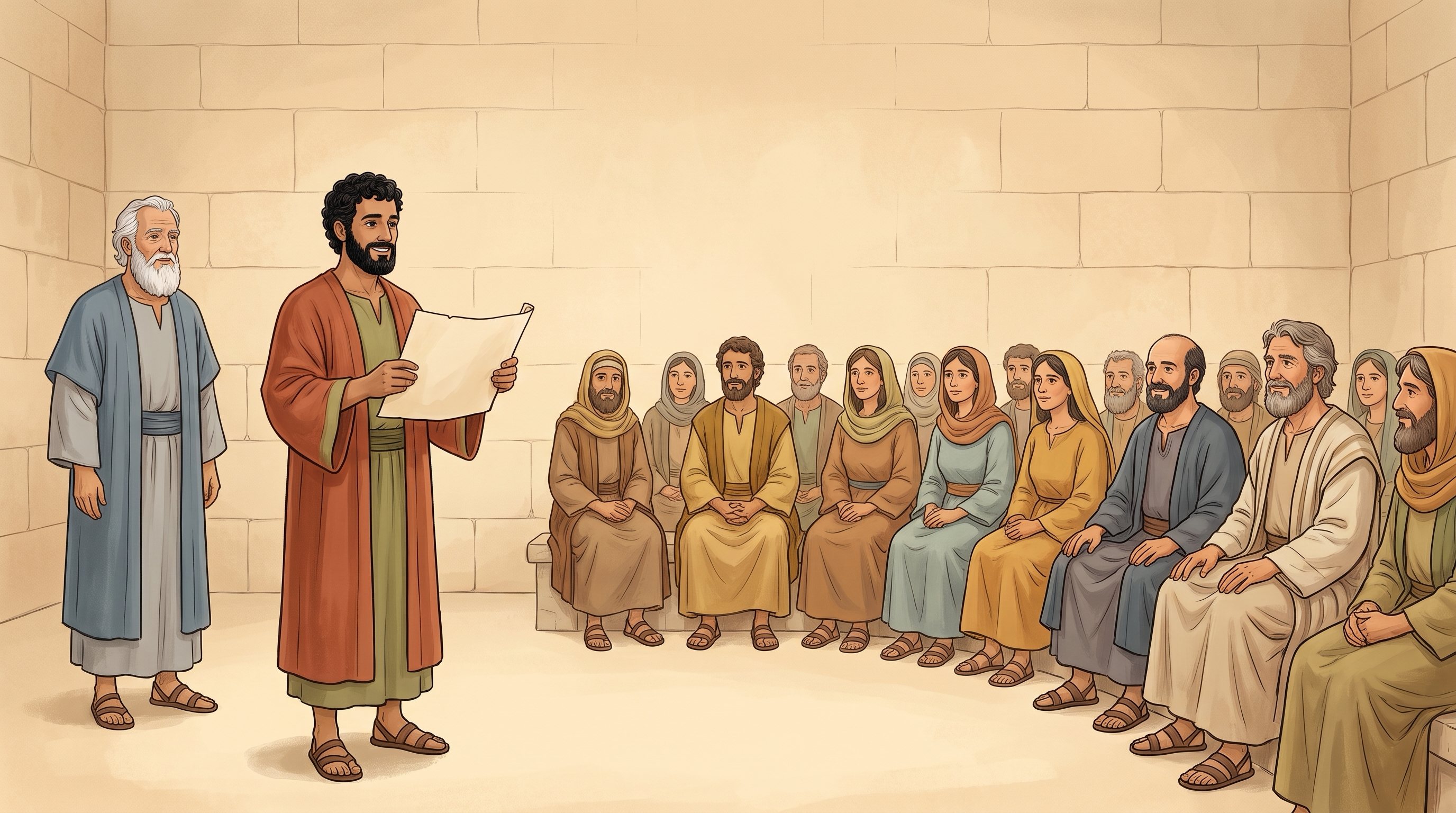
Dear Mayflower family, This week the page grows out of "Not By Agreement," from Acts 15:36–41. The heart of it is this: God's work keeps going because of God's grace, not because the people doing it are strong or because they always agree. Two men who loved Jesus, Paul and Barnabas, could not agree about whether to take a young man named Mark with them, so they went two separate ways, and God did not lose one thing in it. The picture your table will be sitting with is the one from Sunday morning: two ships left Antioch, and one gospel was on both of them. Read together, talk together, pray together, sing together. Here is this week's page. Pastor Anton Not By Agreement Family Devotional · Acts 15:36–41 · September 27, 2026 This page works two ways: as one ten-minute sitting at the table, or as five short Monday-to-Friday steps from the same page. There is no wrong way. This week's Big Idea God's work keeps going because of God's grace, not because the people doing it are strong and not because they always agree. Memory verse "having been commended by the brothers to the grace of the Lord." Acts 15:40 (ESV) 1. READ Read Acts 15:36–41 out loud. Stay on this one passage all week. Monday: verse 36. Paul says, let us go back and see how our friends are doing. Tuesday: verses 37–38. Two good men wanted two different things for one young man. Wednesday: verse 39. They could not agree, so they went two different ways. Thursday: verse 40. The church prayed and handed Paul over to the grace of the Lord. Friday: verse 41. Paul kept going, and the churches grew stronger. 2. THINK Paul and Barnabas both loved Jesus and both loved people, and they still could not agree about whether young Mark should come along, so they went two different ways. The Bible never tells us which man was right. It tells us that the church prayed and handed Paul over to the grace of the Lord Jesus, the same Jesus who was handed over on the cross for people who ran away from Him and who then came back and found them by name, and that grace kept the work going and made the churches stronger. 3. TALK You do not need to ask them all. For young children: Paul and Barnabas could not agree, and they went two different ways. Did God stop taking care of them? Who kept the good news going? For school-age children: The church did not try to fix the argument. They prayed and handed Paul over to the grace of the Lord. What is something you cannot fix that you could hand over to God this week? For teens: Much later, Paul writes to Timothy and asks for Mark by name, and calls him very useful (2 Timothy 4:11). The young man who quit became the one Paul wanted with him at the end. Is there someone you have quietly decided is not worth another try, or someone you are afraid has decided that about you? What changes if a person is held by God's grace and not by their own record or anyone's good opinion of them? For the whole table: Who is one person in our church or our family that we have not seen in a long time, and what is one thing we could do this week to go and see how they are? 4. DO Do this: Pick one person our family has not seen in a while and go see them this week. Take something small with you, a card the children made or a plate of cookies, and ask one question out loud: how are you? Then stay long enough to hear the whole answer. Another way to do this: Sit down together and call that person on speakerphone so everyone can say hello, or write four sentences on a card, have every person at the table sign it, and walk it to their door or their mailbox. 5. PRAY Father, thank You that Your Son was handed over for people who left Him, and that He came back and found them by name. Thank You that Your work keeps going on Your grace and not on how strong we are or how well we agree. Please save every person at this table who does not yet trust Jesus, and grow the ones who do. Make us a family that goes to people instead of keeping track of them from far away. In Jesus' name, Amen. One faith talk this week is a win.
September 20, 2026 • 4 Minute Read
Family Devotional: The Spirit Decided
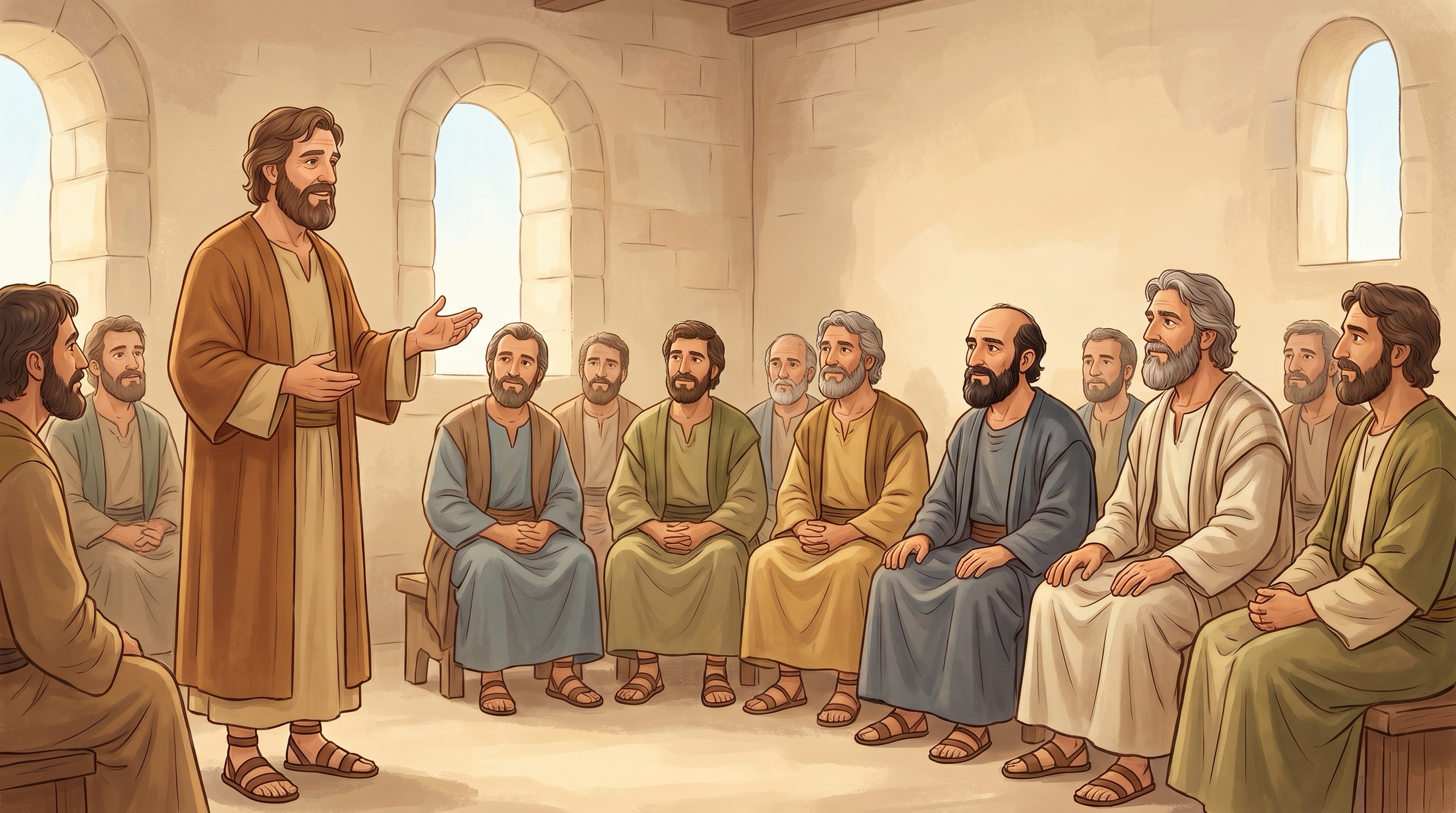
This week the page grows out of "The Spirit Decided," from Acts 15:22–35. The heart of it is this: God's Spirit decided the big question, and the church wrote the answer down, signed it, and sent two men to read it out loud, and the answer was that Jesus already carried the heavy load, so there is no bigger load for anyone to carry. The picture your table will be sitting with is a whole church gathered to hear a letter read aloud, and the gladness in the room when they heard what it said. Read together, talk together, pray together, sing together. Here is this week's page. Pastor Anton The Spirit Decided Family Devotional · Acts 15:22–35 · September 20, 2026 This page works two ways: as one ten-minute sitting at the table, or as five short Monday-to-Friday steps from the same page. There is no wrong way. This week's Big Idea God's Spirit decided, and the church wrote it down and said it out loud. Jesus already carried the heavy load, so nobody has to carry a bigger one. Memory verse "And when they had read it, they rejoiced because of its encouragement." Acts 15:31 (ESV) 1. READ Read Acts 15:27–32 out loud. Stay on this one passage all week. Monday: verse 27. They sent two men to say the same thing out loud. Tuesday: verse 28. It seemed good to the Holy Spirit and to us: no greater burden. Wednesday: verses 29–30. The letter was carried down to Antioch and given to the whole church. Thursday: verse 31. They read it, and they were glad. Friday: verse 32. Judas and Silas stayed and made the brothers strong with many words. 2. THINK Some men told the church in Antioch that God wanted one more thing from them before He would have them, and the church did not know what to believe. The leaders in Jerusalem prayed, listened to God's Word, and wrote a letter that said the Holy Spirit had decided: no greater burden. Jesus carried the heaviest load on the cross, so the church had no more weight to give anybody, and when the letter was read out loud, the people were glad. 3. TALK You do not need to ask them all. For young children: The people heard the letter and were glad. What did the letter say about the heavy load? Who carried the heavy load for us? For school-age children: Why did the leaders send two men to read the letter instead of just sending the paper? What can two men do that a piece of paper cannot? For teens: Verse 24 talks about people who spoke as if they had an authority they were never given, and it left a whole church unsure about their salvation. Has anyone ever made you feel that God wants something more from you before He will accept you? How does verse 28, no greater burden, answer that, and what would it look like to actually trust Jesus with it instead of trusting your own effort? For the whole table: If Jesus already carried the heaviest load, what is one load our family could stop trying to carry this week? 4. DO Do this: Write a short letter together to someone in your family or church who needs to hear something true and kind. Put everyone's name at the bottom. Then hand-deliver it and read it out loud to them, the way Judas and Silas did. Another way to do this: Pick one true thing from this week's passage, like "no greater burden," and each person says it out loud to the person on their left. Then everyone signs their name on one card in the middle of the table, and the card goes on the fridge for the week. 5. PRAY Father, thank You that Your Spirit settled the biggest question and that You put Your promise in writing. Thank You that Jesus carried the heaviest load on the cross so that we do not have to. Please save each person at this table who does not yet trust You, and grow the ones who do. Make us people who say what is true and put our names on it. In Jesus' name, Amen. 6. SING Blessed Assurance. The church in Antioch got its assurance back when the letter was read out loud, and this hymn sings about a promise you can rest on. If no one wants to sing, read the first verse out loud instead. One faith talk this week is a win!
September 13, 2026 • 4 Minute Read
Family Devotional: Saved Like Them
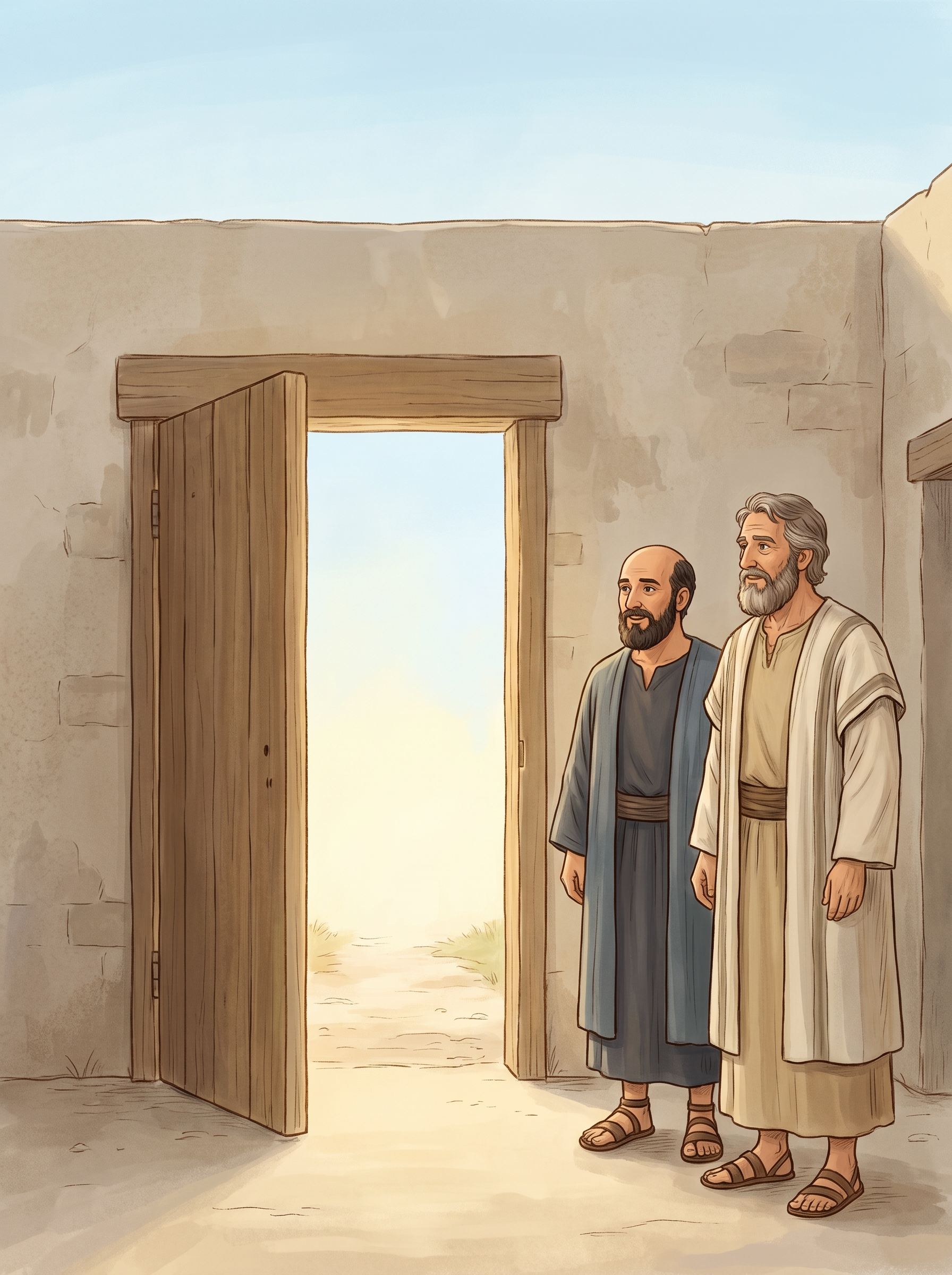
Family Devotional: Saved Like Them This week the page grows out of "Saved Like Them," from Acts 15:1–21. The heart of it is this: God saves everyone the same way, by His kindness in Jesus, and nobody gets in through a different door. Some believers wanted to add one more requirement before God would accept people who were brand new, and Peter stood up and said that he himself would be saved in exactly the same way those new believers were. That is the picture your table will be sitting with this week. Read together, talk together, pray together, sing together. Here is this week's devotion. Saved Like Them Family Devotional · Acts 15:1–21 · September 13, 2026 This page works two ways: as one ten-minute sitting at the table, or as five short Monday-to-Friday steps from the same page. There is no wrong way. This week's Big Idea God saves everyone the same way, by His kindness in Jesus. Nobody gets in a different way. Memory verse "we will be saved through the grace of the Lord Jesus, just as they will." Acts 15:11 (ESV) 1. READ Read Acts 15:7–11 out loud. Stay on this one passage all week. Monday: verse 7. God chose to have the good news spoken to people far away. Tuesday: verse 8. God knows the heart, and He gave them His Spirit. Wednesday: verse 9. God made no difference between us and them, and He made their hearts clean by faith. Thursday: verse 10. Do not lay a load on people that nobody has ever been able to carry. Friday: verse 11. We will be saved by the grace of the Lord Jesus, just like them. 2. THINK Some people said you had to add one more thing before God would take you. Peter stood up and said no. God made their hearts clean by faith, not by anything they brought. Jesus did all of the work on the cross, so the only way anyone comes to God is with empty hands. 3. TALK You do not need to ask them all. For young children: Peter said God made their hearts clean. Can you make your own heart clean? Who can do that? For school-age children: Why do you think people wanted to add one more rule before God would accept somebody new? What rule do we sometimes add? For teens: Peter had walked with Jesus and preached to thousands, and he still said he would be saved in exactly the same way as brand new believers with no history at all. Where do you quietly count on your record, your family, your church, or your behavior, to make you okay with God? What would it mean to trust Jesus instead of that record? For the whole table: What is one thing we could stop expecting a new person to be like, so that they can just come and meet Jesus? 4. DO Do this: Fill a backpack with heavy books. Let each person wear it for a moment and name one rule they think they have to keep to make God happy with them. Then take it off together and say out loud, "Jesus carried it." Another way to do this: Write or draw one of those rules on a slip of paper, crumple it up, and drop it in a bowl in the middle of the table. Read the memory verse over the bowl, then throw the papers away together. 5. PRAY Father, thank You that You know our hearts and that You make hearts clean by faith in Jesus. Please save each person at this table who does not yet belong to You, and grow the ones who do. Keep us from adding anything to what Jesus finished. Give us the same grace You gave them. In Jesus' name, Amen. 6. SING All I Have Is Christ. The whole sermon is that nobody brings anything to God but empty hands, and this hymn says exactly that. If no one wants to sing, read the first verse out loud instead. One faith talk this week is a win.
September 6, 2026 • 3 Minute Read
Family Devotional: God Did It!
Family Devotional: God Did It! Dear Mayflower families, Mayflower families, this page is our weekly Family Devotional. It is one page, built from Sunday's sermon, so the table sits with the same Word the pulpit preached. A parent can lead it cold. You don't need training, and you don't need to prep. Use it as one ten-minute sitting, or walk it Monday through Friday as five short steps from the same page. There is no wrong way. One faith talk this week is a win. This week the table sits with God Did It!, from Acts 14:24-28. Sunday's Big Idea in plain words: God is the one who did the work. Paul and Barnabas were the friends who went with Him. You will sit with a locked door, a long road home, and a God who opens the way in. Released Sundays at 2pm through Planning Center / Church Center. [BRACKETS: Anton, paste the Church Center link if you want one here.] Pastor Anton This week's Big Idea God is the one who did it. We get to go with Him. Memory verse "he had opened a door of faith to the Gentiles." Acts 14:27 (ESV) 1. READ Read Acts 14:24-28 out loud. Stay on this one passage all week. Monday: verses 24-25. They walk the road and speak the word. Tuesday: verse 26. They had been handed to God's grace, and the work was finished. Wednesday: verse 27a. They gather the church and tell what God had done with them. Thursday: verse 27b. God opened a door of faith. Friday: verse 28. They stayed with the disciples for a long time. 2. THINK Paul and Barnabas did not come home to talk about themselves. They told the church what God had done. God finished the work. God opened the door. Jesus said, "I am the door." We cannot open the door of faith from the outside. God opens it, and we come in by trusting Jesus. 3. TALK You do not need to ask them all. For young children: If a door is locked, can you open it from the porch? Who has to open it? For school-age children: Why did Paul and Barnabas talk about God instead of talking about how brave they were? For teens: Where have you finished something hard and then made yourself the hero of the story? What would it mean to trust Christ as the One who opens the door, not just to try harder at being humble? For the whole table: What is one thing God did this week that we will report with God as the subject? 4. DO Do this: At the table tonight, each person names one real thing God did this week. Start the sentence with "God," not "I." Then thank Him out loud. Another way to do this: Draw a simple door and write "God opened it" on the door. Each person writes or draws one gift from this week on a slip of paper and slides it under the door. Read the slips together on Friday. 5. PRAY Father, thank You that You finished the work, and that Jesus is the Door. Save our children. Teach this family to report You, not ourselves. Open the door of faith for anyone at this table still standing on the porch. In Jesus' name, Amen. One faith talk this week is a win.

August 31, 2026 • 3 Minute Read
Does family worship have to be long?
No. It has to be real. And it has to happen. Parents tell me they are tired. Work ran late. The youngest melted down. Someone has practice. By 7:30 the thought of a full service in the living room feels like one more thing you will fail. So you skip it. Then you skip it again. The 1689 Confession will not let that be the last word. Chapter 22.6 says God is to be worshipped everywhere in spirit and in truth, daily in each family, and privately by each person. That is still on us when the day was thin. Daily does not mean elaborate. Moses did not ask Israel for a stage. And these words that I command you today shall be on your heart. You shall teach them diligently to your children, and shall talk of them when you sit in your house, and when you walk by the way, and when you lie down, and when you rise. (Deuteronomy 6:6-7, ESV) Talk. Sit. Walk. A verse at breakfast counts. A psalm in the car counts. A short prayer at the bed counts. Ten honest minutes, kept, will outrun a forty minute plan you never start. Fathers, do not provoke your children to anger, but bring them up in the discipline and instruction of the Lord. (Ephesians 6:4, ESV) Long, grim sessions provoke. So does never opening the book. Aim at instruction they can receive. Here is a pattern that fits a tired house in 2026. Open the Bible. Read a few verses. Ask one question. Pray in ordinary words. Sing one verse of a hymn if you can. Stop. Do it again tomorrow. If the baby cries, finish the sentence and pick the baby up. If a teenager rolls their eyes, keep your tone and keep the habit. You are showing them that God is worth interrupting the night for. The Baptist Faith and Message 2000, Article XVIII, puts the teaching of spiritual and moral values on the parents, by example and by loving discipline. Family worship is one way that duty gets a body. The gathered church still matters. 1689 22.6 also says more formal worship in public assemblies must not be carelessly neglected. Keep Sunday with the church. Keep the reading at home. You need both. You do not need a printed liturgy to begin. You need a Bible that stays on the table. You need a time you will defend. After supper works for many. Bedtime works for others. Morning works if the house wakes in time. Pick one and keep it for two weeks before you change it. If you have never done this, start smaller than you think. One verse. One sentence of thanks. One ask for help. Jesus is not measuring your family by production value. He is the one you are coming to. One next step Tonight, before screens, read this with younger children: Behold, children are a heritage from the LORD, the fruit of the womb a reward. (Psalm 127:3, ESV) With older children, read Deuteronomy 6:6-7 again. Pray, by name, for each person at the table. Ask Jesus to teach your house to do this again tomorrow. If you want help building a simple rhythm, come talk. Check Next Steps for options that fit your situation. Biblical Counseling is there if the home is already in a fight every night. We would rather sit with a short, faithful family than watch you wait for a perfect one.

August 30, 2026 • 4 Minute Read
Family Devotional: Darkness Blinded Him
This page is our weekly Family Devotional. It is one page, built from Sunday's sermon, so the table sits with the same Word the pulpit preached. A parent can lead it cold. You do not need training and you do not need to prep. Use it as one ten-minute sitting, or walk it Monday through Friday as five short steps from the same page. There is no wrong way. One faith talk this week is a win. This week the table sits with Darkness Blinded Him, from 1 John 2:9-11. Sunday's Big Idea in plain words: a person can talk about the light and still be blind, because hatred has already done something to his eyes. You will sit with a dark hallway, a claim that did not help, and Jesus--the Light who opens eyes and sends us to our brothers and sisters. Pastor Anton This page can work two ways: as one ten-minute sitting at the table, or as five short Monday-to-Friday steps from the same page. There is no wrong way. This week's Big Idea A person can say he walks in the light and still be in the dark, because hatred has already blinded his eyes. Memory verse "Whoever says he is in the light and hates his brother is still in darkness." 1 John 2:9 (ESV) 1. READ Read 1 John 2:9-11 out loud. Stay on this one passage all week. Monday: verse 9. The man who says he is in the light. Tuesday: verse 9 again. The word still. Wednesday: verse 10. The one who loves his brother remains in the light. Thursday: verse 11. He walks in the dark and does not know where he is going. Friday: verse 11 again. Because the darkness has blinded his eyes. 2. THINK John is not telling us to be nicer. He is showing us that hatred is a blinding that has already happened. Jesus said, "I am the light of the world." He came so that whoever believes in Him would not stay in the dark. Love for our brothers and sisters shows that His light has done its work. It is not how we buy the light. 3. TALK Pick the questions that fit your table. You do not need to ask them all. For young children: What happens if you walk through the house at night and never turn on a light? For school-age children: Why is saying "I am in the light" not the same thing as loving your brother? For teens: Where have you learned Christian words while quietly deciding you have no use for someone Christ calls your brother or sister? What would it mean to come to Christ the Light instead of managing that contempt? For the whole table: Who is one person we will ask God to help us love this week, and what is one thing love would actually do? 4. DO Do this: Name one brother or sister in the church you have walked past. Pray for that person by name at the table. Then do one concrete kindness for them this week (a message, a meal, a visit, a word). Another way to do this: Draw a simple picture of a dark hallway and a bright lamp. Write one person's name near the lamp. Ask God together to help you love that person, then place the picture where the family will see it. 5. PRAY Father, thank You that Jesus is the Light of the world, and that He came so we would not remain in darkness. Save our children. Give this family a real love for the brothers and sisters You have given us. Open any eyes hatred has shut, and keep us from managing contempt. In Jesus' name, Amen. One faith talk this week is a win.
August 22, 2026 • 6 Minute Read
The Kingdom Road: Family Devotional
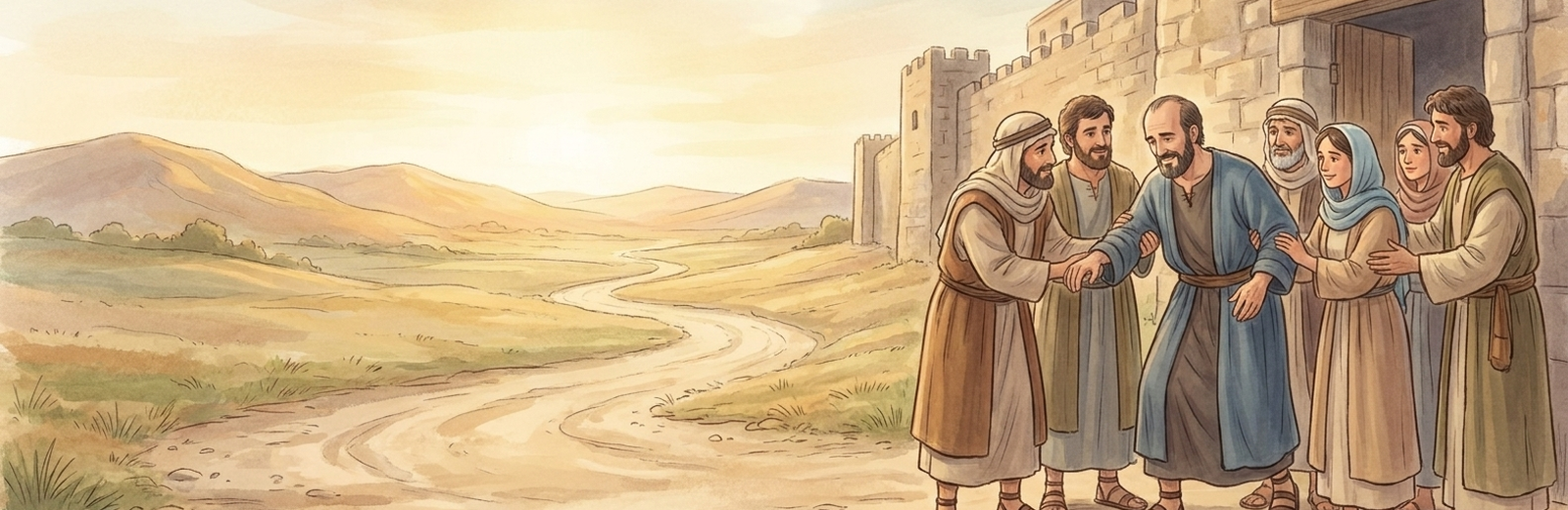
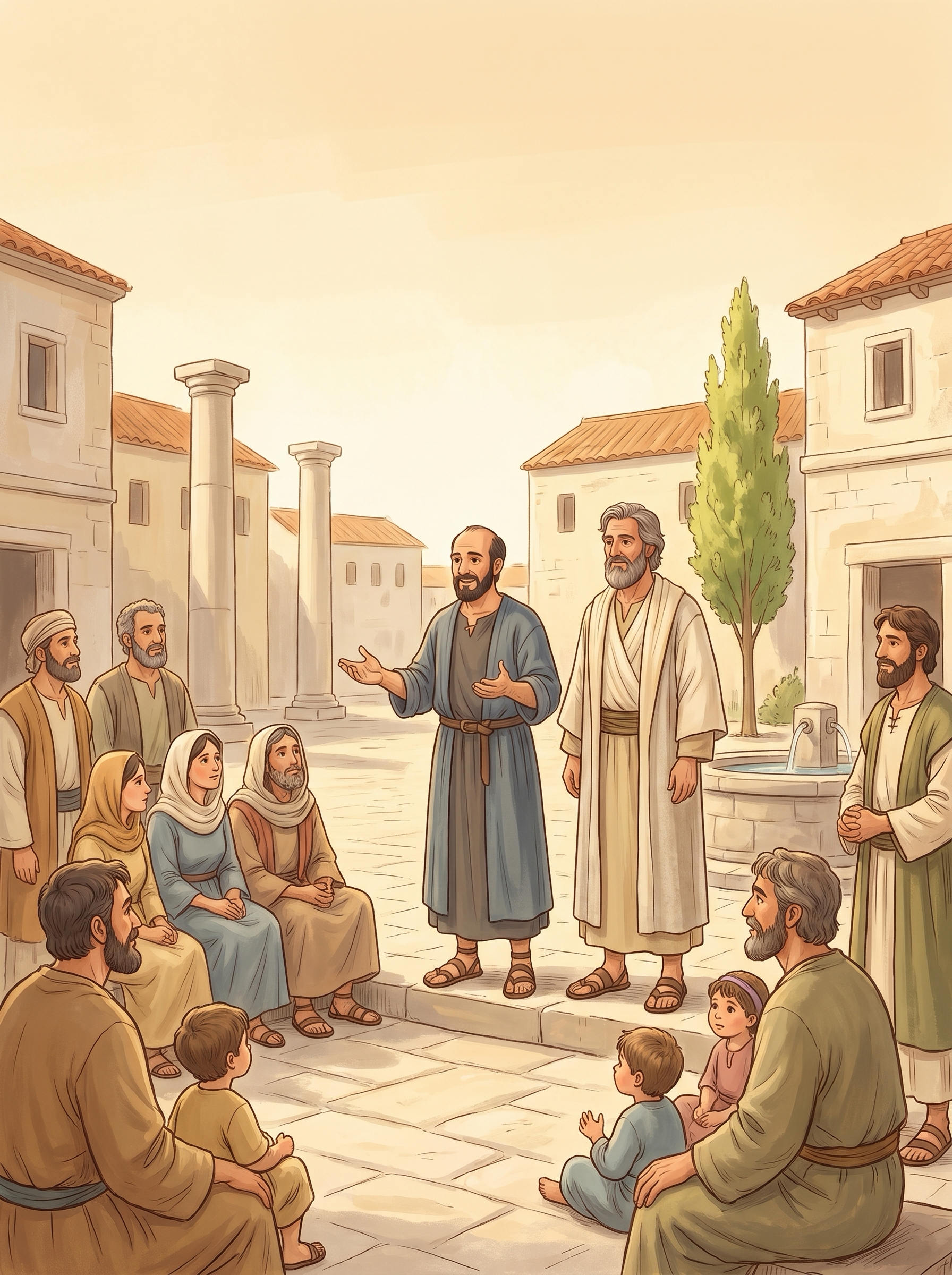
Dear Mayflower family, Here is this week's Family Devotional, ready for your table. If this is your first time opening one, welcome. It is a single page that takes the sermon we just heard on Sunday and brings it home, so the Word preached in the pew and the Word talked over at dinner are the same Word. You do not need to be a teacher or know your Bible cold to lead it. You can do the whole page in about ten minutes in one sitting, or take one small step a night, Monday through Friday. There is no wrong way. One unhurried faith talk this week is a win. This week the page grows out of "The Kingdom Road," from Acts 14:19-23. The heart of it is this: the road into God's kingdom goes through hard things, not around them, and Jesus walked that road first and keeps His people on it all the way home. Paul was stoned and left for dead, and then he got up and walked right back into the city, because the God who saves us also holds on to us. That is the picture your table will be sitting with this week. Read together, talk together, pray together, sing together. Here is this week's page. Pastor Anton This week's Big Idea: The road into God's kingdom goes through hard things, not around them. But Jesus walked that road first, and He holds on to His people the whole way home. Memory verse for the week: "Through many tribulations we must enter the kingdom of God." (Acts 14:22) Say it together at the start of each time you gather. By Friday, see who can say it without looking. 1. READ (start here every time) This week's passage: Acts 14:19-23 (ESV). Read it out loud together. With young children, read it once slowly. With older children and teens, read it and then ask what stood out. If you are taking one step a night, read a short slice each evening: Monday, Acts 14:19, a mob stones Paul and drags him out of the city; Tuesday, Acts 14:20, the believers gather around him and he gets up and walks back in; Wednesday, Acts 14:21-22, Paul goes back to tell the new Christians the way into God's kingdom goes through hard things; Thursday, Acts 14:22, we go through many troubles to enter God's kingdom, and Jesus went that way first; Friday, Acts 14:23, Paul hands the churches to God to keep them safe. 2. THINK (a thought a parent can read out loud, cold) Following God can be hard, and Acts 14 shows us it is true. Paul was hurt badly for telling people about Jesus. But he got up and kept going, and he told the new Christians something surprising: the way into God's kingdom goes through hard things, not around them. Here is the best part. Jesus walked that very same road first. He suffered, and then He rose and went to glory. So when life is hard for someone who loves Jesus, it does not mean God has left. It means they are on Jesus' own road, walking right behind Him, and Jesus never lets go of the people who are His. 3. TALK (pick the questions that fit your table; you do not need to ask them all) For young children: When you fall down and get hurt, who helps you get back up? The Bible says God's people helped Paul get up after he was hurt. How does it feel to know God gives us people to help us up? For school-age children: Paul said the way into God's kingdom goes through hard things, not around them. Why is it good news that Jesus walked that same hard road before us? For teens: A lot of people quietly believe that if God really loved them, life would get easier. Acts 14 says the opposite: the hard road can be the true road. Where have you felt that tension, and what would it change to believe Jesus is on the road ahead of you, not disappointed with you? For the whole table: Verse 23 says Paul handed the new Christians to God to keep them safe. What would change in our family if we really believed God is holding on to us, even when things are hard? 4. DO (one small thing to carry the truth into the week) Do this: This week, find one person who is going through something hard, a friend, a neighbor, someone at church, and do one small thing to help them carry it. Bring them a treat, write them a note, or just sit with them. Decide together tonight who it will be, then do it before Friday. Another way to do this: Make a card together as a family with the words of our memory verse on it, and give it to someone who is tired or sad, so they know God is holding them and our family is with them too. If you would rather, you can say the memory verse out loud to that person instead of giving a card. Pick the one you can do. 5. PRAY (a parent leads; pray it as written or in your own words) Father, thank You that the way into Your kingdom goes through hard things, and that Jesus walked it first, from suffering into glory. Thank You that You never let go of the people who are Yours. We ask You to give each of our children a heart that truly trusts Jesus, so they would follow Him all the way home. And help our family walk with people who are having a hard time. In Jesus' name, amen. 6. SING (close by singing one together) This week's song: "He Will Hold Me Fast" (it says exactly what this passage teaches, that we are kept safe not by how tightly we hold on to God but by how tightly He holds on to us). Sing one verse, or the whole thing. If your family does not know it, read the first verse out loud together instead. One faith talk this week is a win. If your family can do this most nights, even better. Keep it short, keep it warm, keep coming back to it.
August 9, 2026 • 5 Minute Read
He Bears Witness: Family Devotional
Dear Mayflower family, Here is this week’s Family Devotional, ready for your table. If this is your first time opening one, welcome. It is a single page that takes the sermon we just heard on Sunday and brings it home, so the Word preached in the pew and the Word talked over at dinner are the same Word. You do not need to be a teacher or know your Bible cold to lead it. You can do the whole page in about ten minutes in one sitting, or take one small step a night, Monday through Friday. There is no wrong way. One unhurried faith talk this week is a win. This week the page grows out of “He Bears Witness,” from Acts 14:1-7. The heart of it is this: when God sends us to tell people about Jesus, He does not send us alone; He stands behind every word and makes it do its work. Two men walked into a city that did not want their message and grew braver instead of quieter, because they knew who was standing behind them. That is the picture your table will be sitting with this week. Read together, talk together, pray together, sing together. Here is this week’s page. Pastor Anton This week’s Big Idea: When God sends us to tell people about Jesus, He does not send us alone. He stands behind every word and helps it do its work. Memory verse for the week: “the Lord, who bore witness to the word of his grace” (Acts 14:3) Say it together at the start of each time you gather. By Friday, see who can say it without looking. 1. READ (start here every time) This week’s passage: Acts 14:1-3 (ESV), inside the bigger story of Acts 14:1-7. Read it out loud together. With young children, read it once slowly. With older children and teens, read it and then ask what stood out. If you are taking one step a night, read a short slice each evening: Monday, Acts 14:1, a great number believe; Tuesday, Acts 14:2, some hearts turn hard; Wednesday, Acts 14:3, the Lord backs the word with his own witness; Thursday, Acts 14:4, the city splits in two; Friday, Acts 14:5-7, they are chased out, and keep preaching. 2. THINK (a thought a parent can read out loud, cold) Paul and Barnabas walked into a city that did not want to hear about Jesus, and instead of getting quiet, they got braver. How? God Himself stood behind their words and helped them. When we tell people about Jesus, God does not send us out alone. He is right there, doing the real work in people’s hearts, the same Jesus who died and rose to make us His own. Our job is just to open our mouths. God’s job is to make the words land. 3. TALK (pick the questions that fit your table; you do not need to ask them all) For young children: When you are scared to do something, it helps to have a grown-up right beside you. Who was standing beside Paul and Barnabas, helping them, even when the whole city was against them? For school-age children: Paul and Barnabas got braver when things got harder, not quieter. What made them so brave? For teens: Have you ever gone quiet about Jesus because you were afraid of what someone would think? Paul was told the whole thing did not rest on him, because God stood behind the message. Would it change anything for you to know you are not carrying that alone? For the whole table: God helps the words we say about Jesus do their work. Who is one person our family could tell about Jesus this week? 4. DO (one small thing to carry the truth into the week) Do this: Paul and Barnabas kept telling people about Jesus even when it was hard. As a family, pick one person who may not know Jesus, and this week tell them one true thing about Him. Decide together tonight who it will be, then do it before Friday. Another way to do this: Practice first, right here. Go around the table and let each person say one thing about Jesus they love, out loud, the way you would tell a friend. One sentence is plenty. If you would rather, draw a picture of it and show it to someone this week. Say it or draw it. Pick the one you can do. 5. PRAY (a parent leads; pray it as written or in your own words) Father, thank You that when we tell people about Jesus, You never send us out alone. You stand behind Your own word and make it do its work. Please give each of our children a new heart that truly trusts Christ, and make our whole family brave to speak about Him. In Jesus’ name, amen. 6. SING (close by singing one together) This week’s song: “He Will Hold Me Fast” (it says the Lord keeps hold of us and will never let us go, just as He stands behind His own word and will not let it fail). Sing one verse, or the whole thing. If your family does not know it, read the first verse out loud together instead. One faith talk this week is a win. If your family can do this most nights, even better. Keep it short, keep it warm, keep coming back to it.
August 2, 2026 • 6 Minute Read
What the Law Could Never Do: Family Devotional
Dear parents, Sunday morning, the whole church sat in Acts 13, where Paul stood up in a synagogue full of religious people and told them the hard, freeing truth: God's good rules can show us what is wrong with us, but they can never fix it. Only Jesus can take sin away, and He does it for everyone who believes, no matter who they are or how far away they live. This week, the home gets to sit on the same Word the pulpit preached. The devotional below is built so you can lead it cold, with no training and no prep. Do the whole page in one sitting of about ten minutes, or take one short step a night, Monday through Friday. There is no wrong way to use it. Here is why this matters around your table this week. Many of the people in that synagogue looked religious and respectable on the outside, and they still walked away from Jesus. Your children are learning, one ordinary night at a time, the difference between knowing about God and actually trusting Christ for themselves. You do not have to be the strong one. You get to hold out the good news plainly: Jesus did what no rule ever could, and everyone who believes in Him is set free. One faith talk this week is a win. In Christ, Pastor Anton This week's Big Idea: The law can read you your sentence. Only Christ can lift it. God's rules can show us what is wrong with us, but they can never fix it. Only Jesus can take our sin away. And He set people free no matter who they were or how far away they lived. Memory verse for the week: "Through this man forgiveness of sins is proclaimed to you, and by him everyone who believes is freed." (Acts 13:38-39) Say it together at the start of each time you gather. By Friday, see who can say it without looking. 1. READ (start here every time) This week's passage: Acts 13:38-39 (ESV), inside the bigger story of Acts 13:13-52. Read it out loud together. With young children, read it once slowly. With older children and teens, read it and then ask what stood out. If you are taking one step a night, read a short slice each evening: Monday, Acts 13:23, God sends the Savior He promised long ago, Jesus; Tuesday, Acts 13:29-30, they laid Him in a tomb, but God raised Him; Wednesday, Acts 13:38-39, everyone who believes is set free; Thursday, Acts 13:46-47, the good news runs out to all the nations; Friday, Acts 13:48-52, the people believe and are filled with joy. 2. THINK (a thought a parent can read out loud, cold) God gave His people good rules a long time ago. The rules were true, and they showed people what was wrong inside them, like a doctor's note that names a sickness. But a note cannot make you well, and the rules could never take away sin. So God sent His own Son, Jesus, just like He promised. Jesus died and rose again, and now anyone who trusts in Him is set free from every wrong thing they have ever done. The rules could point to the problem. Only Jesus could fix it. 3. TALK (pick the questions that fit your table; you do not need to ask them all) For young children: The Bible says everyone who believes in Jesus is "freed." What is one thing it feels like to be set free, like being let out the door to go play? For school-age children: Paul told these people that God's good rules could never set them free from their sin. So what, or who, can set us free? For teens: These people were religious and respectable, and many of them still walked away from Jesus. Is it possible to look like a good church person on the outside and never actually trust Christ for yourself? Where are you in that, honestly? For the whole table: Paul said the good news is for "everyone who believes." What would change in our family if we really believed Jesus sets us free, no matter what we have done? 4. DO (one small thing to carry the truth into the week) Do this: Paul carried the news about Jesus to people who had never heard it, and the light reached all the way to us. This week, as a family, pick one person who may not know that Jesus sets people free, and tell them one true thing about Him. A neighbor, a friend, a cousin. Decide together tonight who it will be, then do it before Friday. Another way to do this: Practice here first. Go around the table and let each person say one thing about Jesus they love, out loud, the way you would say it to a friend. You can keep it to one sentence. If you would rather, draw a picture of the one thing about Jesus you would want to tell someone. When you are ready, you can say it or show it to a friend this week. Pick the one you can do. 5. PRAY (a parent leads; pray it as written or in your own words) Father, thank You that You kept Your promise and sent Jesus to do what no rule ever could. Thank You that He died and rose, and that everyone who believes in Him is set free. We ask You to give each of our children a new heart that truly trusts Christ, so they would be freed too. And help us carry this good news out to people who have never heard it. In Jesus' name, amen. 6. SING (close by singing one together) This week's song: "All I Have Is Christ" (it says plainly that we could not save ourselves and that Jesus alone set us free and became all we have, which is the whole point of this passage). Sing one verse, or the whole thing. If your family does not know it, read the first verse out loud together instead. One faith talk this week is a win. If your family can do this most nights, even better. Keep it short, keep it warm, keep coming back to it.
July 12, 2026 • 7 Minute Read
Family Devotional
July 12, 2026: Glory Withheld (Acts 12:20-25) Dear parents, This morning, the whole church finished Acts 12, where a proud king dressed in shining silver let a crowd call him a god, and God would not let the lie stand. This week, the home gets to sit on the same Word that the pulpit preached. The devotional below is built so you can lead it cold, with no training and no prep. Do the whole page in one sitting of about ten minutes, or take one short step a night, Monday through Friday. There is no wrong way to use it. Here is why this matters around your table this week. Your children are learning, one ordinary day at a time, who their applause belongs to, whether the goal of life is to be praised or to praise the One who made them. You do not have to teach them to chase a shout; that comes for free. You get to teach them something better: that the only One who can keep both us and His glory is Jesus, the King who refused every stolen cheer and was struck down in our place so He could lift us up. One faith talk this week is a win. In Christ, Pastor Anton This week's Big Idea: God will not give His glory to anyone else, and that is good news. He shares all kinds of things with us, His bread, His mercy, even His own Son, but the glory of being God belongs to Him alone. A proud king tried to keep some of that glory for himself, and it ended badly. Jesus, the true King, did the opposite: He gave God the glory and gave Himself for us. So we get to give God the glory too, and it is the safest, happiest thing we can ever do. Memory verse for the week: "An angel of the Lord struck him down, because he did not give God the glory." (Acts 12:23) Say it together at the start of each time you gather. By Friday, see who can say it without looking. 1. READ (start here every time) This week's passage: Acts 12:20-25 (ESV). Read it out loud together. With young children, read it once slowly. With older children and teens, read it and then ask what stood out. If you are taking one step a night, read a short slice each evening: Monday, Acts 12:20, hungry cities come asking the king for food; Tuesday, Acts 12:21-22, the king shines in his robe and the crowd shouts that he is a god; Wednesday, Acts 12:23, God strikes the king because he kept the glory that was God's; Thursday, Acts 12:24, "but" the word of God keeps growing; Friday, Acts 12:25, God is already getting helpers ready for the next chapter of His work. 2. THINK (a thought a parent can read out loud, cold) A king named Herod put on a robe that sparkled like silver in the morning sun, sat on his throne, and gave a speech. The crowd shouted, "That is the voice of a god, not a man!" Herod did not say, "Stop, I am only a man." He just sat there and soaked it in, and kept the praise that belonged to God. So God struck him down, and the proud king died. But the very same God who would not share His glory loves to share other things. He gives us bread when we are hungry, mercy when we sin, and best of all He gave us His own Son. Jesus is the true King, and instead of grabbing glory, He let Himself be struck down on the cross so that sinners like us could be forgiven and lifted up. God lifted Jesus higher than every name. So we do not have to fight to be praised. We get to give the glory to God, who is so much bigger and better than we are. 3. TALK (pick the questions that fit your table; you do not need to ask them all) For young children: The king let people call him a god instead of telling them about the real God. Who should we say is great, the king or God? What is one thing God made that shows He is great? For school-age children: Herod kept the praise that belonged to God, and it ended badly. What is the difference between Herod, who grabbed the glory, and Jesus, who gave the glory to God? For teens: We all live in front of some audience whose praise we want, the team, the group chat, the people whose opinion we replay at night. Be honest: whose shout do you chase most? And have you ever stopped chasing it long enough to give your whole life to the King who was struck down in your place? For the whole table: When something good happens to our family this week, how can we say out loud, on the spot, "Thank You, God, that came from You"? 4. DO (one small thing to carry the truth into the week) Do this: Start a "Glory to God" habit at dinner this week. Each night, go around the table and have everyone name one good thing from their day, then say together, "Thank You, God, the glory is Yours." Watch for the temptation to grab credit for ourselves, and practice handing it straight back to God out loud. Another way to do this: Make a "Glory Jar." Keep a jar and some slips of paper on the table. Whenever someone notices a good gift, a sunny day, a kind friend, food to eat, write it on a slip and drop it in the jar. At the end of the week, pour the jar out, read the slips together, and thank God that every one of them came from Him. Add one slip or fill the jar; do what you can this week. The jar is your reminder that the glory goes back to God. 5. PRAY (a parent leads; pray it as written or in your own words) Father, You are God, and Your glory belongs to You alone. Thank You that You still share so much with us, Your bread, Your mercy, and most of all Your Son. Forgive us for the times we chase praise and try to keep glory that is Yours. Thank You for Jesus, the true King, who refused the crowd's cheer and was struck down on the cross so we could be forgiven. Teach our family to give You the glory in everything. And we ask You to give each of our children a new heart that truly trusts Christ, so that one day they gladly give You the glory forever. In Jesus' name, amen. 6. SING (close by singing one together) This week's song: "How Great Thou Art" (the whole song hands the glory back to God, singing of His greatness in creation and in the cross, exactly the response Herod refused and Jesus gave). Sing one verse, or the whole thing. If your family does not know it, read the first verse out loud together instead. One faith talk this week is a win. If your family can do this most nights, even better. Keep it short, keep it warm, keep coming back to it.
October 11, 2026 • 5 Minute Read
Family Devotional: Help Us
Dear Mayflower family, This week the page grows out of “Help Us,” from Acts 16:6–10. The heart of it is this: people everywhere need help, and the best help God sends is the good news about Jesus. Paul and his friends wanted to tell people about Jesus, and God closed two roads in front of them. Then one night Paul saw a man from a faraway place called Macedonia, saying, come over and help us, and the friends knew what help to bring: the good news about Jesus. The line your table will be sitting with is the one from Sunday morning: they asked for help, and God sent the gospel. Read together, talk together, pray together, sing together. Here is this week's page. Pastor Anton Help Us Family Devotional · Acts 16:6–10 · October 11, 2026 This page works two ways: as one ten-minute sitting at the table, or as five short Monday-to-Friday steps from the same page. There is no wrong way. This week's Big Idea People everywhere need help, and the best help God sends is the good news about Jesus. Memory verse “concluding that God had called us to preach the gospel to them.” Acts 16:10 (ESV) 1. READ Read Acts 16:6–10 out loud. Stay on this one passage all week. Monday: verse 6. Paul wanted to tell people about Jesus in Asia, and God said no. Tuesday: verse 7. They tried another road, and Jesus closed that one too. Wednesday: verse 8. They came to Troas, a town by the sea, and ran out of road. Thursday: verse 9. In the night a man said to Paul, come over and help us. Friday: verse 10. Paul and his friends knew the help he needed was the good news about Jesus, and they went right away. 2. THINK Paul and his friends wanted to tell people about Jesus, and Jesus closed two roads because He knew where His good news needed to go next. A man from Macedonia asked for help, and he did not even know what kind of help he needed. God sent him the very best help there is: friends who came to tell him that Jesus died for sinners and rose again, and that Jesus is able to help everyone who calls on Him. 3. TALK You do not need to ask them all. For young children: Paul wanted to go one way, and God said no. Then a man asked Paul for help. What help did God send him? For school-age children: The man said help, but he did not say what kind. When someone we know is sick, sad, or having a hard time, what are some ways we can help them? How could we tell them about Jesus too? For teens: The man from Macedonia was asking for more than he knew. Lots of people say they are spiritual, but they could not tell you that the help they need is Jesus. When things get hard, what do you reach for first? Have you ever asked Jesus to help you in your own words, the way a woman once knelt in front of Him and said, “Lord, help me” (Matthew 15:25)? For the whole table: Who is one person we know who needs help this week, and what is one way we could help them and tell them about Jesus? 4. DO Do this: Pick one person who is having a hard time: someone sick, someone lonely, someone sad. Bring them something small this week, a meal, a treat, or a card the children made, and in the card write one true sentence about Jesus, like “Jesus is able to help.” Another way to do this: Pick one person who does not know Jesus yet. Draw a little boat on a piece of paper, write that person's name on the sail, and put it on the fridge. Every night this week, ask God to send them the good news about Jesus, the way He sent Paul across the sea. 5. PRAY Father, thank You that when people cried for help, You sent the good news about Jesus, who died for sinners and rose again. Please save every person at this table who does not yet trust Jesus, and grow the ones who do. Help us to notice the people around us who need help, and give us courage to tell them about Your Son. In Jesus' name, Amen. 6. SING Come Thou Fount of Every Blessing. It sings that we have come this far only by God's help, and that Jesus came looking for us when we were wandering, which is exactly what He did for the people of Macedonia. If no one wants to sing, read the first verse out loud instead. One faith talk this week is a win.
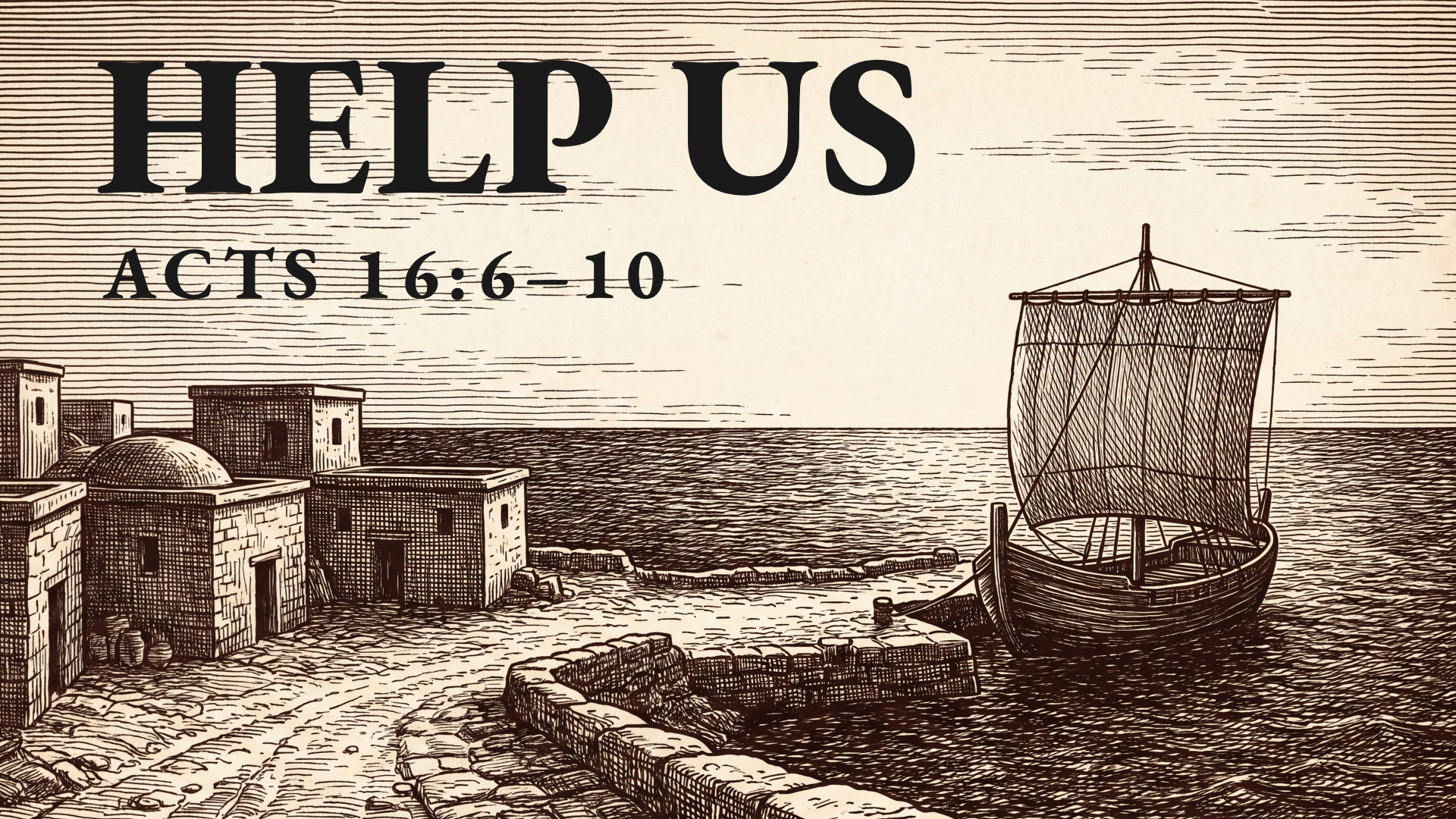
October 11, 2026 • 4 Minute Read
October 11th | Help Us
The help the world is begging for is the gospel. This morning Pastor Anton preached Acts 16:6–10. The sermon was Help Us. Paul and his team tried two roads to preach the word, and Jesus closed them both. At the edge of the sea, in the night, a man of Macedonia appeared to Paul and said, come over and help us. He did not say, come and preach to us. He said help, and he did not know what help he needed. By morning the team had concluded that God had called them to preach the gospel, and they went immediately. The help that man was begging for was the good news of Jesus Christ. They asked for help. God sent the gospel. Now that you have heard it, sit with it this week. Some of us walked in Sunday standing in front of a road God closed, and most of us know someone who is saying help without using the word. Live into what was preached in two plain ways: hand the map back to the Lord who sees the whole road, and when someone near you cries for help, bring the meal and bring Jesus with you, in words. The five readings below do not repeat Sunday's passage. They walk you through the Lord who went where He was sent, the God our help comes from, a woman who knelt and said Lord, help me, the Savior who is able to help because He suffered, and the beautiful feet of those who are sent. Grace to you as you carry Sunday's text through the week. Pastor Anton Five-Day Devotional Monday Luke 4:42–44 When the crowds at Capernaum tried to keep Jesus from leaving, He told them He must preach the good news of the kingdom of God to the other towns as well, because that is why He was sent. He went where the Father sent Him, not where the crowd wanted, and the same Lord closed two roads in Acts 16 because He knew where His gospel was going next. If He has closed a road on you, He has not stopped steering. Pray: Lord Jesus, You went where the Father sent You; teach me to trust You with the road You have closed in front of me. Tuesday Psalm 121:1–2 The psalmist lifts his eyes to the hills and asks the question everyone asks sooner or later: from where does my help come? His answer is not a plan or a thing but a Person, the Lord who made heaven and earth. The man of Macedonia knew he needed help without knowing what it was, and this psalm tells you where it comes from. Pray: Father, when I do not even know what help I need, turn my eyes from the hills to You, the Maker of heaven and earth. Wednesday Matthew 15:21–28 A Gentile woman with a suffering daughter came to Jesus, knelt in front of Him, and said three words: Lord, help me. She had no claim on Him and she knew it, and He helped her. Those three words are still a prayer He has never turned away. Pray: Lord, help me, not because I have earned it but because You are the One who helps. Thursday Hebrews 2:14–18 Jesus took on our flesh and blood and suffered when tempted, so that He is able to help those who are being tempted. He does not help from a distance; He went to the cross so that when we cry help, there is someone who can actually answer. Whatever you are carrying this week, you are bringing it to One who has been there. Pray: Lord Jesus, You suffered so that You could help me; make me quick to come to You first and not last. Friday Romans 10:13–17 Everyone who calls on the name of the Lord will be saved, Paul writes, but how will people call on One they have never heard of, and how will they hear without someone preaching? That is why God sent Paul across the sea to Macedonia, and it is why He sends you across the street. Carry that into next Sunday's gathering, and think about the one person near you who is saying help, and what it would look like this week to bring Jesus with you in words. Pray: Father, You sent someone to tell me about Your Son; give me courage to speak His name to the one You have put near me. They asked for help. God sent the gospel.
October 4, 2026 • 4 Minute Read
Family Devotional: Timothy Joins Paul and Silas
Dear Mayflower family, This week the page grows out of "Timothy Joins Paul and Silas," from Acts 16:1–5, Sunday's passage, with Leon Jones as our guest preacher. The heart of it is this: Paul was willing to give up almost anything so people could hear about Jesus, but he never changed the good news about Jesus. A young man named Timothy, taught the Bible at home by his mother and grandmother, joins Paul and Silas, gives up something hard so Jewish people will listen, and helps carry the good news to the churches just as it was. Read together, talk together, pray together, sing together. Here is this week's page. Pastor Anton Timothy Joins Paul and Silas Family Devotional · Acts 16:1–5 · October 4, 2026 This page works two ways: as one ten-minute sitting at the table, or as five short Monday-to-Friday steps from the same page. There is no wrong way. This week's Big Idea Paul was willing to give up almost anything so people could hear about Jesus, but he never changed the good news about Jesus. Memory verse "So the churches were strengthened in the faith, and they increased in numbers daily." Acts 16:5 (ESV) 1. READ Read Acts 16:1–5 out loud. Stay on this one passage all week. Monday: verse 1. God gives Paul a new helper, a young man named Timothy. Tuesday: verse 2. The Christians in two towns said good things about Timothy. Wednesday: verse 3. Timothy gave up something hard so Jewish people would listen. Thursday: verse 4. Paul and his friends brought the churches the decisions from Jerusalem to keep. Friday: verse 5. The churches grew strong, and more people believed every day. 2. THINK Timothy's mother and grandmother taught him the Bible when he was little, and when Paul came to town, God gave Timothy to Paul as a helper. Paul had Timothy circumcised, a sign Jewish families gave their boys, not to make Timothy right with God but so Jewish people would be willing to listen, because Paul would give up almost anything so people could hear about Jesus. But Paul never changed the good news itself: Jesus did everything needed to save us, and nobody has to add anything to what He did. 3. TALK You do not need to ask them all. For young children: Timothy's mother and grandmother taught him about God when he was little. Who teaches you about God? What is one thing you have learned about Jesus? For school-age children: The Christians in two different towns said good things about Timothy. What do you think they noticed about him? What would you want people to notice about you, and who could help you grow that way? For teens: Paul would change almost anything about how he did things so people would listen, but he would never change the message. Is there something you could give up so a friend would be more willing to hear about Jesus? Have you ever been tempted to leave part of Jesus out so faith would be easier to talk about? And have you trusted Christ yourself, or have you only learned about Him? For the whole table: What is one thing our family could give up this week so that someone else could hear about Jesus or feel His love? 4. DO Do this: This week, each person picks one thing they usually get to choose, like the dinner, the game, or the seat in the car, and gives that choice to someone else in the family on purpose, without being asked. At the end of the week, talk about how Paul and Timothy gave things up so others could hear about Jesus. Another way to do this: Choose one favorite thing to share together this week, like a snack, a toy, or an afternoon, and give it to someone outside the family, a neighbor or a friend from church, with a note that says, "Jesus loves you, and we wanted to share." 5. PRAY Father, thank You that Jesus gave up everything to come and save people like us, and that nobody has to add anything to what He did. Please save every person at this table who does not yet trust Jesus, and grow the ones who do. Make us a family that gladly gives things up so others can hear about You, and that never changes Your good news. In Jesus' name, Amen. 6. SING All I Have Is Christ. Paul could give up so much because Christ was enough, and this hymn sings that nothing else is needed. If no one wants to sing, read the first verse out loud instead. One faith talk this week is a win!

October 4, 2026 • 4 Minute Read
October 4th | Character Over Comfort
Everything but the Gospel As you sit with Sunday's passage this week, ask yourself two plain questions. What freedom am I holding so tightly that I will not spend it for someone else's good? And where have I been tempted to soften the gospel, or add something to it, to make it easier to carry? The five readings below do not repeat Sunday's passage. They walk you through the home that raised Timothy, the man Paul came to trust most, the freedom Paul spent, the line Paul would not cross, and the Christ who finished what no one can add to. Grace to you as you carry Sunday's text through the week. Pastor Anton Five-Day Devotional Monday 2 Timothy 1:3–7 Paul remembers the sincere faith that dwelt first in Timothy's grandmother Lois and his mother Eunice, and now in Timothy. Luke tells us only that his mother was a believer and his father was a Greek, which means much of that faith was handed down in an ordinary home, by people who were not famous and may often have felt alone in it. The faith taught at your table is never wasted, even when it seems small. Pray: Father, thank You for the people who taught me Your Word, and make me faithful to hand it on to the ones You have placed in my home. Tuesday Philippians 2:19–24 Years after Lystra, Paul writes, "I have no one like him," and says that others seek their own interests, not those of Jesus Christ. The young man two towns once spoke well of had spent years proving it, serving with Paul in the gospel as a son with a father. A good name among God's people is not built by guarding your image; it grows out of a life that keeps looking to the interests of Christ. Pray: Lord Jesus, turn my attention from my own interests to Yours, and make my life one that speaks well of You. Wednesday 1 Corinthians 9:19–23 Paul says he is free from all, and then he spends that freedom by making himself a servant to all, that he might win more of them. That is what Acts 16:3 looks like on the ground: a real cost, freely paid, so that others would listen. Ask where your freedom has turned into something you guard, and who might be helped to hear the gospel if you let it go. Pray: Father, show me one freedom I can spend this week for someone else's good, and give me joy in spending it. Thursday Galatians 2:1–5 The same Paul who circumcised Timothy refused to let Titus be circumcised, and he says he did not give in for a moment, so that the truth of the gospel would be preserved. With Titus, people were demanding circumcision as a condition of being saved, and giving in would have said that Christ was not enough. Paul was flexible about everything that belonged to him and immovable about the one thing that belonged to Christ. Pray: Lord, give me a soft heart toward people and a firm grip on Your gospel, and never let me trade the one for the other. Friday Colossians 2:9–14 Paul tells believers that in Christ they were circumcised with a circumcision made without hands, and that God canceled the record of debt that stood against us and nailed it to the cross. Timothy's circumcision opened a synagogue door; only Christ opens heaven's door, and He does it with nothing added. Carry that into next Sunday's gathering, and come with empty hands to the One who finished the work. Pray: Lord Jesus, I stop trying to add to what You have done, and I rest in Your finished work with nothing in my hands. Everything but the gospel.
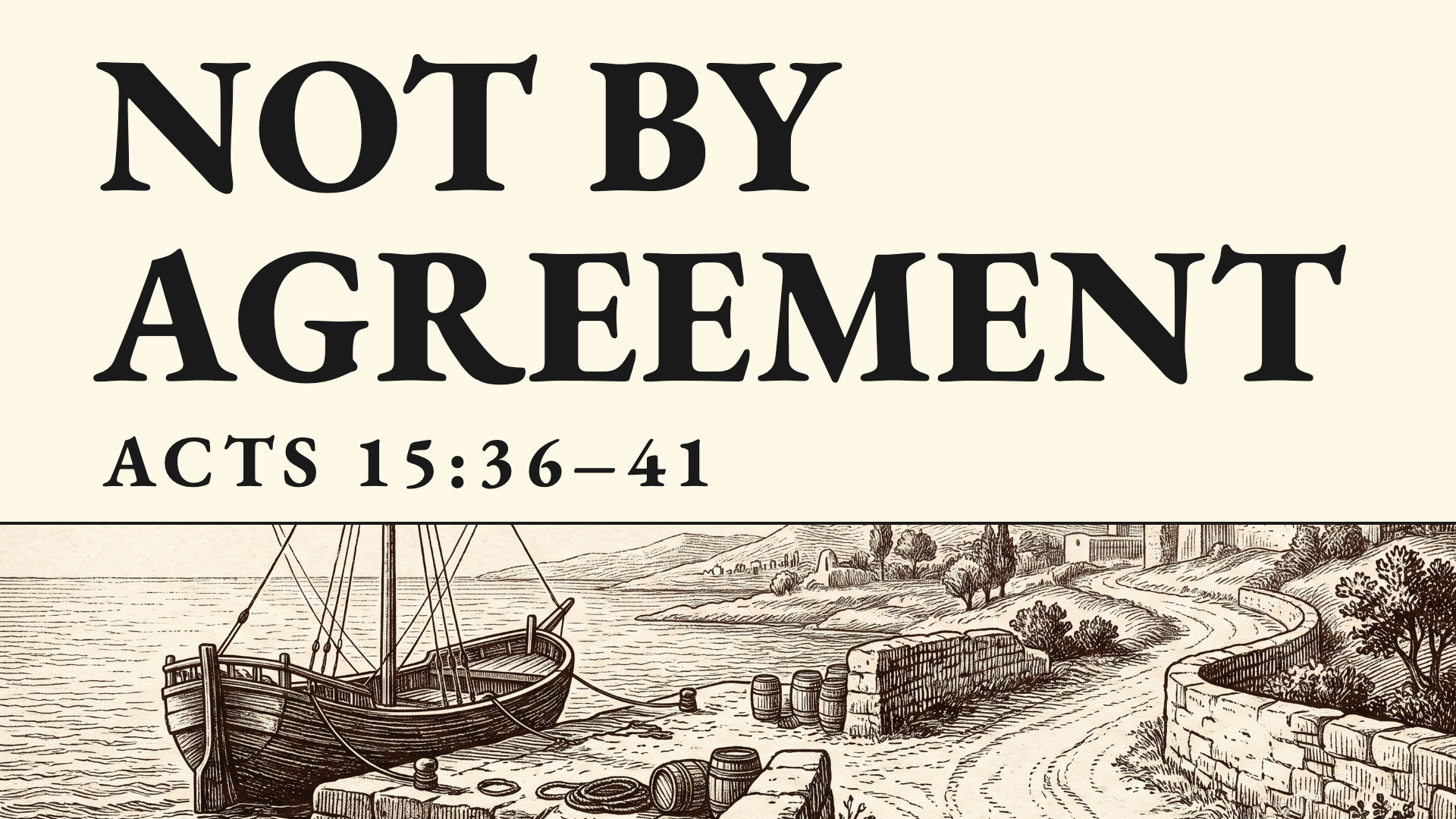
September 27, 2026 • 5 Minute Read
September 27th | Not By Agreement
The work of the Lord goes forward on the grace of the Lord, not on the strength of the men who carry it. This morning Pastor Anton preached Acts 15:36–41. The sermon was Not By Agreement. For two Sundays we watched a church answer the hardest question it would ever have to face, and then Luke ends the chapter with two of the best men in the New Testament in a quarrel they could not settle. He does not hide it, he does not soften it, and he does not tell us which one was right. He tells us the work went on, and doubled. The church at Antioch did not fix the two men. It prayed, and handed Paul over to the grace of the Lord, and that grace carried what they dropped. Two ships left Antioch. One gospel was on both of them. Now that you have heard it, sit with it. Most of us walked in Sunday with a name we have not said out loud in a while, someone we used to work beside, and one day the working together stopped. This text will not sort you into a column and it will not hand you a verdict, and that is mercy rather than neglect. Live into what was preached in two plain ways this week: go and see how somebody is instead of only knowing how they are, and hand over the thing you cannot fix, which is not the same as giving up on it. The five readings below do not repeat Sunday's passage. They walk you through the man who took a risk on Paul, the Son who was handed over for us all, the gospel that advances even where people are not getting along, the quitter who became very useful, and the Lord who came back for His friends by name. Grace to you as you carry the text through the week. Pastor Anton Five-Day Devotional Monday Acts 9:26–28 When Saul came to Jerusalem, every disciple in the city was afraid of him, and one man took him by the arm and brought him to the apostles. That man was Barnabas, and years later he was fighting for young Mark exactly the way he had once fought for Paul. Before you decide somebody is finished, remember that you are standing where you are because someone took a risk on you. Pray: Father, thank You for the person who took a risk on me when I had no record to show; make me willing to be that person for someone else. Tuesday Romans 8:31–34 Paul writes that God did not spare His own Son but gave Him up for us all, and the words gave Him up are the same words Luke used when the church handed Paul over to the grace of the Lord. Before anyone was ever handed to that grace, the Lord of that grace had been handed over first, betrayed by one He chose and deserted by all of them, and He did not withdraw. Nothing you are carrying this week is held by weaker hands than those. Pray: Lord Jesus, You were handed over for me and did not withdraw; teach me to trust the hands I have been put into. Wednesday Philippians 1:12–18 Paul says that what has happened to him has really served to advance the gospel, and then he admits plainly that some are proclaiming Christ out of rivalry and not sincerely. He rejoices anyway, because Christ is proclaimed. God's work does not wait for the people doing it to get along, and He does not lose a thing in the mess we make of it. Pray: Father, when the people around me will not get along, keep my eyes on the Christ who is still being proclaimed. Thursday 2 Timothy 4:9–13 At the end of his life Paul is cold and mostly alone, asking for his cloak and his books, and he asks for one more thing: get Mark and bring him with you, for he is very useful to me for ministry. This is the same Mark he would not have in the boat. The grace that would not let Paul go did not let Mark go either, and it is not finished with you. Pray: Lord, I have been the one who turned back; thank You that Your grace kept its hold on me and is not done with me yet. Friday John 21:15–19 Peter denied Him three times and then went back to fishing, and Jesus came to the beach, made breakfast, and asked him one question three times before sending him back to the work. That is the Lord to whose grace the church at Antioch handed Paul over, and He has not changed since. Carry that into next Sunday's gathering, and think about the person you have written off, and what it would look like to go find them the way He found Peter. Pray: Lord Jesus, You came back for the one who denied You; give me the courage to go and find the one I have been avoiding. Two ships left Antioch. One gospel was on both of them.
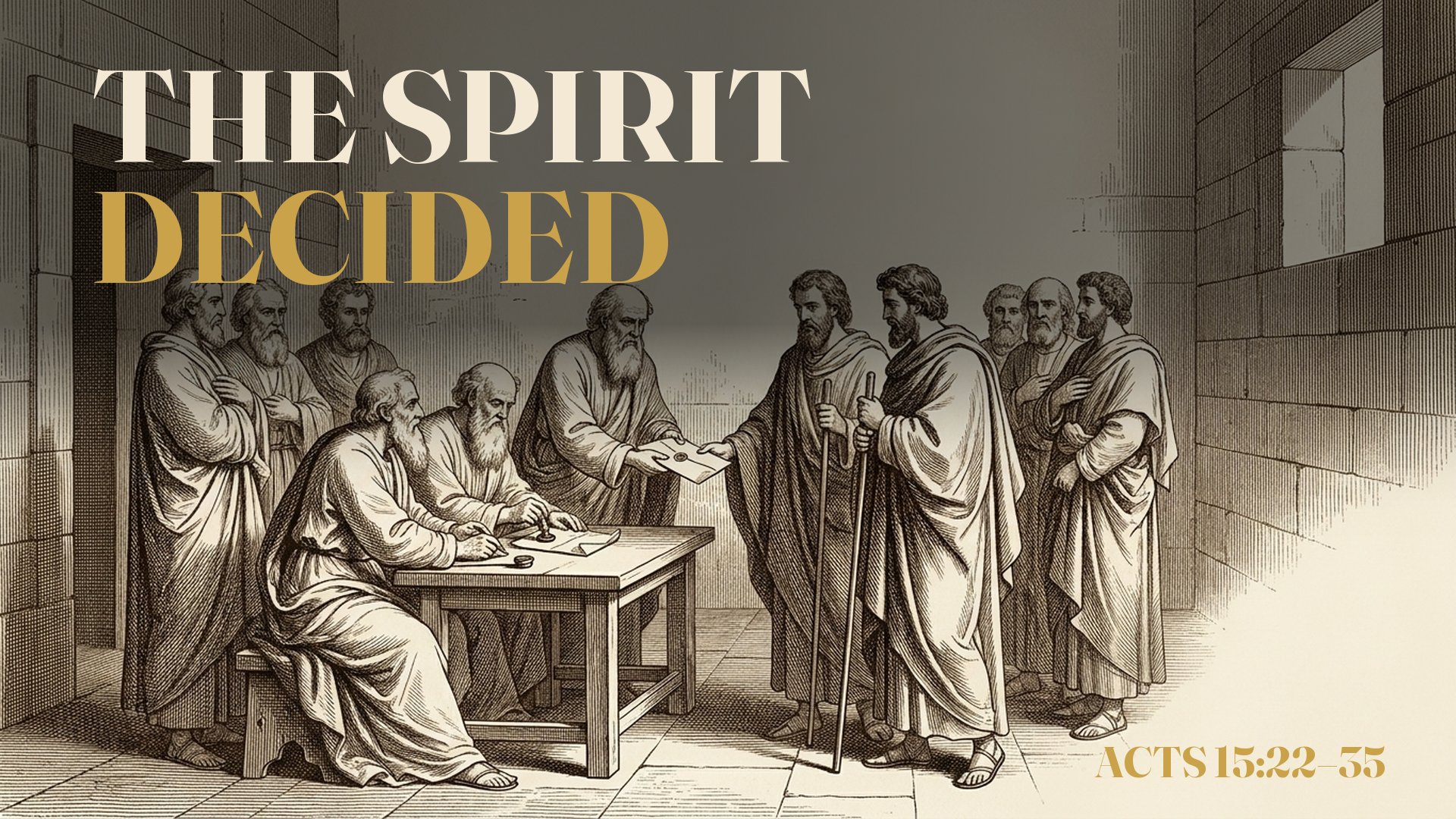
September 20, 2026 • 4 Minute Read
September 20th | The Spirit Decided
The Spirit settled it and the church says it. Now that you have heard it, sit with it. Some of you walked in Sunday braced for a further requirement, a list you had not been shown. The letter's answer is that the weight was already carried by the Lord Jesus, and there is none left to hand out. Live into what was preached this week by naming the burden a confident voice laid on you, and by being someone who can be trusted with a sentence: say what you mean, put your name on it, and stay in the room for the questions. The five readings below do not repeat Sunday's passage. They walk you through the burden Christ carried, the brothers He is not ashamed of, the liberty He asks us to spend, the men who stay, and the Spirit who still bears witness. Grace to you as you carry Sunday's text through the week. Pastor Anton Five-Day Devotional Monday Galatians 3:10–14 Paul says everyone who relies on works of the law is under a curse, and then he tells you where the curse went: Christ became a curse for us. That is why the letter from Jerusalem could say no greater burden. The apostles had no weight left to hand out because Christ had already gone under all of it. Pray: Lord Jesus, You carried the whole weight in my place; keep me from picking any of it back up. Tuesday Hebrews 2:10–13 The letter opened with brothers writing to brothers, the pillars of Jerusalem addressing uncircumcised Gentiles as family. They could only write that salutation because the Son wrote it first; He is not ashamed to call them brothers. Your standing in the family rests on what He did and what He said, and neither one moves. Pray: Father, thank You that Your Son is not ashamed to call me brother; settle my heart on His word and not on my own certainty. Wednesday 1 Corinthians 8:9–13 The four things in the letter were not the price of getting in; three of them were freedoms Gentile believers gave up so a Jewish brother could sit at the same table, and the fourth, sexual immorality, was never a freedom for anyone. Paul presses the same principle in Corinth: take care that your liberty does not become a stumbling block to the weak. Liberty that will not spend itself for a neighbor has stopped being Christian liberty. Pray: Lord, show me one freedom I can lay down this week for somebody weaker than me, and give me the grace to lay it down gladly. Thursday Colossians 4:7–9 Paul did not send only a letter to Colossae; he sent Tychicus and Onesimus, who would tell them everything and encourage their hearts. Jerusalem did the same with Judas and Silas, men who said the same words with their own mouths and stayed to be asked. When you have to correct something this week, do not do it in writing and then go quiet; stay in the room. Pray: Father, make me someone who says a hard thing to a person's face and stays long enough to answer for it. Friday John 15:26–27 Jesus promised that the Spirit would bear witness about Him, and then He added, and you also will bear witness. That is Acts 15 in one sentence, read from the other side of the sermon: the Spirit settled it, and the church says it. Carry it into next Sunday's gathering, and think about the person in your life who was handed a gospel with a condition bolted on, and what you will say to their face. Pray: Holy Spirit, You have borne witness to Christ; open my mouth to say plainly what You have settled. The Spirit settled it. Grace put it in writing.
September 20, 2026 • 4 Minute Read
Family Devotional: The Spirit Decided
This week the page grows out of "The Spirit Decided," from Acts 15:22–35. The heart of it is this: God's Spirit decided the big question, and the church wrote the answer down, signed it, and sent two men to read it out loud, and the answer was that Jesus already carried the heavy load, so there is no bigger load for anyone to carry. The picture your table will be sitting with is a whole church gathered to hear a letter read aloud, and the gladness in the room when they heard what it said. Read together, talk together, pray together, sing together. Here is this week's page. Pastor Anton The Spirit Decided Family Devotional · Acts 15:22–35 · September 20, 2026 This page works two ways: as one ten-minute sitting at the table, or as five short Monday-to-Friday steps from the same page. There is no wrong way. This week's Big Idea God's Spirit decided, and the church wrote it down and said it out loud. Jesus already carried the heavy load, so nobody has to carry a bigger one. Memory verse "And when they had read it, they rejoiced because of its encouragement." Acts 15:31 (ESV) 1. READ Read Acts 15:27–32 out loud. Stay on this one passage all week. Monday: verse 27. They sent two men to say the same thing out loud. Tuesday: verse 28. It seemed good to the Holy Spirit and to us: no greater burden. Wednesday: verses 29–30. The letter was carried down to Antioch and given to the whole church. Thursday: verse 31. They read it, and they were glad. Friday: verse 32. Judas and Silas stayed and made the brothers strong with many words. 2. THINK Some men told the church in Antioch that God wanted one more thing from them before He would have them, and the church did not know what to believe. The leaders in Jerusalem prayed, listened to God's Word, and wrote a letter that said the Holy Spirit had decided: no greater burden. Jesus carried the heaviest load on the cross, so the church had no more weight to give anybody, and when the letter was read out loud, the people were glad. 3. TALK You do not need to ask them all. For young children: The people heard the letter and were glad. What did the letter say about the heavy load? Who carried the heavy load for us? For school-age children: Why did the leaders send two men to read the letter instead of just sending the paper? What can two men do that a piece of paper cannot? For teens: Verse 24 talks about people who spoke as if they had an authority they were never given, and it left a whole church unsure about their salvation. Has anyone ever made you feel that God wants something more from you before He will accept you? How does verse 28, no greater burden, answer that, and what would it look like to actually trust Jesus with it instead of trusting your own effort? For the whole table: If Jesus already carried the heaviest load, what is one load our family could stop trying to carry this week? 4. DO Do this: Write a short letter together to someone in your family or church who needs to hear something true and kind. Put everyone's name at the bottom. Then hand-deliver it and read it out loud to them, the way Judas and Silas did. Another way to do this: Pick one true thing from this week's passage, like "no greater burden," and each person says it out loud to the person on their left. Then everyone signs their name on one card in the middle of the table, and the card goes on the fridge for the week. 5. PRAY Father, thank You that Your Spirit settled the biggest question and that You put Your promise in writing. Thank You that Jesus carried the heaviest load on the cross so that we do not have to. Please save each person at this table who does not yet trust You, and grow the ones who do. Make us people who say what is true and put our names on it. In Jesus' name, Amen. 6. SING Blessed Assurance. The church in Antioch got its assurance back when the letter was read out loud, and this hymn sings about a promise you can rest on. If no one wants to sing, read the first verse out loud instead. One faith talk this week is a win!
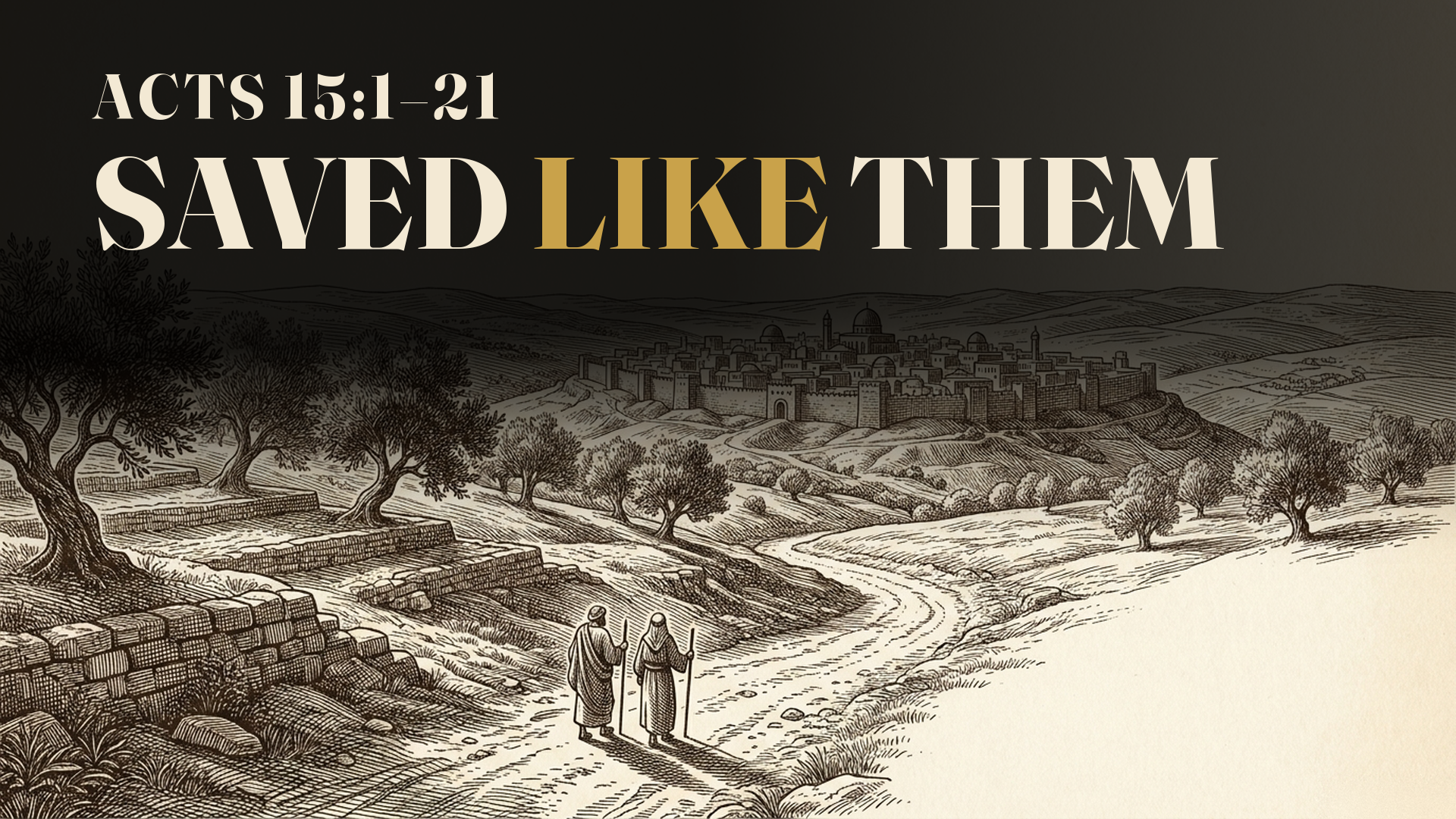
September 13, 2026 • 3 Minute Read
September 13th | Saved Like Them
One grace saves everyone, and it saves the apostle no differently than it saves the Gentile. Now that you have heard this week’s sermon, sit with it. The men in verse 1 were not oddballs. They were believers; they were in the room, and they had a Bible verse. They simply read it in the wrong order, and a sign meant to mark God's people became a door somebody stood in front of. Live into what was preached this week by finding the word you have been adding, and by naming the weight you have been carrying in the name of Jesus that Jesus never laid on you. The five readings below do not repeat Sunday's chapter. They walk you through the same order, the same Spirit, the same yoke, and the same wall taken down. Five-Day Devotional Monday Genesis 15:1–6 God brought Abraham outside, showed him the stars, and Abraham believed God, and it was counted to him as righteousness. That happened two chapters before the sign of the covenant was ever given. Sunday's whole crisis began with men who kept the sign and lost the order. Pray: Father, teach me to believe You first, and to stop treating the marks of Your covenant as the price of admission. Tuesday Acts 10:44–48 The Holy Spirit fell on a Roman officer's household while Peter was still speaking, before any ceremony and before a single credential. God gave His own testimony about who belonged, and He gave it without asking anyone to qualify first. That is the room Peter reached back for when the council in Jerusalem could not agree. Pray: Lord, You know the heart; give me eyes to see Your Spirit at work in people who do not look like me. Wednesday Galatians 2:11–16 Paul had to say to Peter's face in Antioch what Peter had said out loud in Jerusalem: a person is not justified by works of the law but through faith in Jesus Christ. Even an apostle can drift back toward the table he came from. The word Sunday exposed, the little word "and," does not stay buried, and it needs killing more than once. Pray: Lord Jesus, keep me from adding anything to Your finished work, even quietly, even in front of people I want to impress. Thursday Matthew 11:28–30 Peter called the added requirement a yoke that neither their fathers nor they had ever been able to bear. Jesus offers a yoke too, and He calls it easy, because He has already gone under the load that crushed everyone else. He is not handing you a lighter version of the same burden. Pray: Lord Jesus, I am taking it off; carry what I was never able to carry. Friday Ephesians 2:11–22 Paul writes to Gentiles who were once separated, strangers to the covenants, and tells them that Christ Himself is our peace and has broken down in His flesh the dividing wall of hostility. That is Sunday's council stated as doctrine, and it is worth reading from this side of the sermon. Carry it into next Sunday's gathering, and look for the person still standing on the far side of a wall Christ has already taken down. Pray: Father, You have made us one in Christ; show me the wall I am still guarding, and give me grace to leave it down. Same grace. Same way. We are saved like them.

September 6, 2026 • 2 Minute Read
September 6th | God Did It!
Five-Day Devotional Monday 1 Corinthians 3:5-7 Paul planted. Apollos watered. God gave the growth. Sunday's missionaries came home as companions, not authors. Neither he who plants nor he who waters is anything, but only God who gives the growth. That is Acts 14:26 in another room. Pray: Father, take the subject line back; teach me to call You the One who gives the growth. Tuesday Philippians 2:12-13 Work out your own salvation with fear and trembling, for it is God who works in you, both to will and to work for His good pleasure. Companions work. The Agent is still God. Sunday handed you over to the grace that completes what it starts. Pray: Lord, work in me what I cannot finish in my own strength, and keep me from claiming the work as mine. Wednesday Ephesians 2:8-10 By grace you have been saved through faith. And this is not your own doing; it is the gift of God. The door of faith in Acts 14:27 is the same gift. You did not pick the lock. God opened it, and the good works were prepared beforehand that you should walk in them. Pray: Jesus, You are the gift and the Door; keep me from treating faith as a key I cut myself. Thursday Isaiah 26:12 O LORD, You will ordain peace for us, for You have indeed done for us all our works. Sunday's refrain in another century. The finished work you are tempted to author was already His. Report Him. Pray: O Lord, You have done for us all our works; humble my mouth, then open it to name You. Friday 2 Corinthians 4:5 What we proclaim is not ourselves, but Jesus Christ as Lord, with ourselves as your servants for Jesus' sake. Return to Sunday's report from this side of the sermon. They declared God. Carry that grammar into the next gathering. Pray: Father, we proclaim not ourselves; make God the subject of every sentence we can. God Did It!
September 6, 2026 • 3 Minute Read
Family Devotional: God Did It!
Family Devotional: God Did It! Dear Mayflower families, Mayflower families, this page is our weekly Family Devotional. It is one page, built from Sunday's sermon, so the table sits with the same Word the pulpit preached. A parent can lead it cold. You don't need training, and you don't need to prep. Use it as one ten-minute sitting, or walk it Monday through Friday as five short steps from the same page. There is no wrong way. One faith talk this week is a win. This week the table sits with God Did It!, from Acts 14:24-28. Sunday's Big Idea in plain words: God is the one who did the work. Paul and Barnabas were the friends who went with Him. You will sit with a locked door, a long road home, and a God who opens the way in. Released Sundays at 2pm through Planning Center / Church Center. [BRACKETS: Anton, paste the Church Center link if you want one here.] Pastor Anton This week's Big Idea God is the one who did it. We get to go with Him. Memory verse "he had opened a door of faith to the Gentiles." Acts 14:27 (ESV) 1. READ Read Acts 14:24-28 out loud. Stay on this one passage all week. Monday: verses 24-25. They walk the road and speak the word. Tuesday: verse 26. They had been handed to God's grace, and the work was finished. Wednesday: verse 27a. They gather the church and tell what God had done with them. Thursday: verse 27b. God opened a door of faith. Friday: verse 28. They stayed with the disciples for a long time. 2. THINK Paul and Barnabas did not come home to talk about themselves. They told the church what God had done. God finished the work. God opened the door. Jesus said, "I am the door." We cannot open the door of faith from the outside. God opens it, and we come in by trusting Jesus. 3. TALK You do not need to ask them all. For young children: If a door is locked, can you open it from the porch? Who has to open it? For school-age children: Why did Paul and Barnabas talk about God instead of talking about how brave they were? For teens: Where have you finished something hard and then made yourself the hero of the story? What would it mean to trust Christ as the One who opens the door, not just to try harder at being humble? For the whole table: What is one thing God did this week that we will report with God as the subject? 4. DO Do this: At the table tonight, each person names one real thing God did this week. Start the sentence with "God," not "I." Then thank Him out loud. Another way to do this: Draw a simple door and write "God opened it" on the door. Each person writes or draws one gift from this week on a slip of paper and slides it under the door. Read the slips together on Friday. 5. PRAY Father, thank You that You finished the work, and that Jesus is the Door. Save our children. Teach this family to report You, not ourselves. Open the door of faith for anyone at this table still standing on the porch. In Jesus' name, Amen. One faith talk this week is a win.
August 31, 2026 • 3 Minute Read
Does family worship have to be long?
No. It has to be real. And it has to happen. Parents tell me they are tired. Work ran late. The youngest melted down. Someone has practice. By 7:30 the thought of a full service in the living room feels like one more thing you will fail. So you skip it. Then you skip it again. The 1689 Confession will not let that be the last word. Chapter 22.6 says God is to be worshipped everywhere in spirit and in truth, daily in each family, and privately by each person. That is still on us when the day was thin. Daily does not mean elaborate. Moses did not ask Israel for a stage. And these words that I command you today shall be on your heart. You shall teach them diligently to your children, and shall talk of them when you sit in your house, and when you walk by the way, and when you lie down, and when you rise. (Deuteronomy 6:6-7, ESV) Talk. Sit. Walk. A verse at breakfast counts. A psalm in the car counts. A short prayer at the bed counts. Ten honest minutes, kept, will outrun a forty minute plan you never start. Fathers, do not provoke your children to anger, but bring them up in the discipline and instruction of the Lord. (Ephesians 6:4, ESV) Long, grim sessions provoke. So does never opening the book. Aim at instruction they can receive. Here is a pattern that fits a tired house in 2026. Open the Bible. Read a few verses. Ask one question. Pray in ordinary words. Sing one verse of a hymn if you can. Stop. Do it again tomorrow. If the baby cries, finish the sentence and pick the baby up. If a teenager rolls their eyes, keep your tone and keep the habit. You are showing them that God is worth interrupting the night for. The Baptist Faith and Message 2000, Article XVIII, puts the teaching of spiritual and moral values on the parents, by example and by loving discipline. Family worship is one way that duty gets a body. The gathered church still matters. 1689 22.6 also says more formal worship in public assemblies must not be carelessly neglected. Keep Sunday with the church. Keep the reading at home. You need both. You do not need a printed liturgy to begin. You need a Bible that stays on the table. You need a time you will defend. After supper works for many. Bedtime works for others. Morning works if the house wakes in time. Pick one and keep it for two weeks before you change it. If you have never done this, start smaller than you think. One verse. One sentence of thanks. One ask for help. Jesus is not measuring your family by production value. He is the one you are coming to. One next step Tonight, before screens, read this with younger children: Behold, children are a heritage from the LORD, the fruit of the womb a reward. (Psalm 127:3, ESV) With older children, read Deuteronomy 6:6-7 again. Pray, by name, for each person at the table. Ask Jesus to teach your house to do this again tomorrow. If you want help building a simple rhythm, come talk. Check Next Steps for options that fit your situation. Biblical Counseling is there if the home is already in a fight every night. We would rather sit with a short, faithful family than watch you wait for a perfect one.
August 30, 2026 • 4 Minute Read
Family Devotional: Darkness Blinded Him
This page is our weekly Family Devotional. It is one page, built from Sunday's sermon, so the table sits with the same Word the pulpit preached. A parent can lead it cold. You do not need training and you do not need to prep. Use it as one ten-minute sitting, or walk it Monday through Friday as five short steps from the same page. There is no wrong way. One faith talk this week is a win. This week the table sits with Darkness Blinded Him, from 1 John 2:9-11. Sunday's Big Idea in plain words: a person can talk about the light and still be blind, because hatred has already done something to his eyes. You will sit with a dark hallway, a claim that did not help, and Jesus--the Light who opens eyes and sends us to our brothers and sisters. Pastor Anton This page can work two ways: as one ten-minute sitting at the table, or as five short Monday-to-Friday steps from the same page. There is no wrong way. This week's Big Idea A person can say he walks in the light and still be in the dark, because hatred has already blinded his eyes. Memory verse "Whoever says he is in the light and hates his brother is still in darkness." 1 John 2:9 (ESV) 1. READ Read 1 John 2:9-11 out loud. Stay on this one passage all week. Monday: verse 9. The man who says he is in the light. Tuesday: verse 9 again. The word still. Wednesday: verse 10. The one who loves his brother remains in the light. Thursday: verse 11. He walks in the dark and does not know where he is going. Friday: verse 11 again. Because the darkness has blinded his eyes. 2. THINK John is not telling us to be nicer. He is showing us that hatred is a blinding that has already happened. Jesus said, "I am the light of the world." He came so that whoever believes in Him would not stay in the dark. Love for our brothers and sisters shows that His light has done its work. It is not how we buy the light. 3. TALK Pick the questions that fit your table. You do not need to ask them all. For young children: What happens if you walk through the house at night and never turn on a light? For school-age children: Why is saying "I am in the light" not the same thing as loving your brother? For teens: Where have you learned Christian words while quietly deciding you have no use for someone Christ calls your brother or sister? What would it mean to come to Christ the Light instead of managing that contempt? For the whole table: Who is one person we will ask God to help us love this week, and what is one thing love would actually do? 4. DO Do this: Name one brother or sister in the church you have walked past. Pray for that person by name at the table. Then do one concrete kindness for them this week (a message, a meal, a visit, a word). Another way to do this: Draw a simple picture of a dark hallway and a bright lamp. Write one person's name near the lamp. Ask God together to help you love that person, then place the picture where the family will see it. 5. PRAY Father, thank You that Jesus is the Light of the world, and that He came so we would not remain in darkness. Save our children. Give this family a real love for the brothers and sisters You have given us. Open any eyes hatred has shut, and keep us from managing contempt. In Jesus' name, Amen. One faith talk this week is a win.


Copyright 2026 Mayflower Church
All Rights Reserved.